
How to Download TIDAL Music: App and Local File Options

In short, you can download TIDAL music for offline playback in the official mobile app, but those downloads remain inside TIDAL. A separate computer workflow is required when you need a compatible local audio file. This guide gives the complete steps for both results and keeps recorder and Telegram options clearly separated.
- For travel or saving mobile data: use TIDAL's official iPhone or Android download controls.
- For a transferable local file: use a separate computer workflow and verify its current output settings.
- For an occasional recording: a recorder is slower and requires manual start, stop, trimming, and file checks.
- For a Telegram bot: do not provide account credentials; verify the bot, file, and link before opening anything.
How to Download Music from TIDAL Officially on iPhone and Android
TIDAL's official download route is the best fit when you want offline listening in the mobile app. The saved content remains managed by TIDAL rather than appearing as an ordinary MP3 folder that you can freely move to another player.
Official Mobile Download Steps
- Open TIDAL and sign in. Use the account that has access to offline listening under TIDAL's current plan and regional rules.
- Check the download settings first. Open the app settings and review the available download quality, mobile data, and storage controls before saving a large album or playlist. Labels and quality choices may vary by app version.
- Find the album or playlist. Browse your library or search TIDAL, then open the full album or playlist page.
- Select Download. Use the Download control shown on the album or playlist page. Keep the app open long enough for the items to finish saving, especially on a slow connection.
- Verify the result before going offline. Open the app's Downloads or offline section and confirm that the requested items show as completed rather than pending.
- Test with connectivity disabled. Briefly switch off Wi-Fi and mobile data, then play one saved track inside TIDAL. This catches incomplete downloads before a trip.
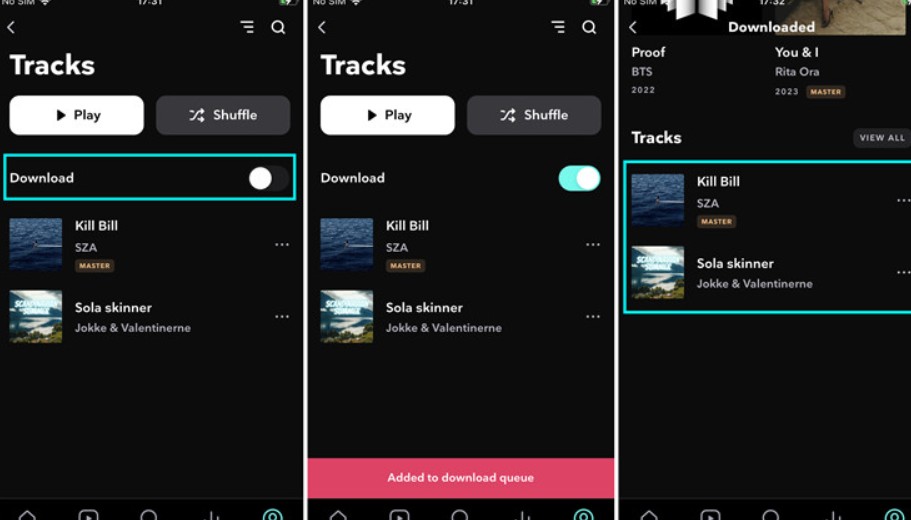
Important boundary: an official TIDAL download is designed for playback in the TIDAL app. Account status, device authorization, storage space, and periodic service checks can affect continued access. If offline playback fails, review TIDAL's current device authorization guidance.
How to Save TIDAL Music as Local Audio Files
A local-file workflow is a different task from TIDAL's official app download. Use this route only for content you are authorized to access and only where the platform's terms and applicable law permit it. The dedicated TIDAL local-file workflow guide covers MP3-focused decisions in more detail.
MusicFab TIDAL Converter
MusicFab provides a built-in TIDAL browser and a queue-based computer workflow. It is intended for readers who need to select songs, albums, or playlists and review compatible local output options before processing. Current system support, formats, quality settings, access requirements, trial terms, and plan details can change, so verify them on the MusicFab TIDAL Converter page or in the current product interface.
| Check before downloading | Why it matters |
|---|---|
| Account access | The built-in browser needs access to the TIDAL content you intend to process. |
| Output format and quality | Choose settings that match the target player and available source before adding a large batch. |
| Playlist selection | Review selected tracks so unavailable, duplicate, or unwanted items do not enter the queue. |
| Output folder | Confirm where completed local files will be stored and that the drive has enough space. |
How to Download TIDAL Music Using MusicFab
- Install and launch MusicFab. Use the current installer for your supported computer system. Open the application and review its storage location before beginning a large download.
- Select TIDAL. Choose TIDAL from the available services. Sign in through the built-in browser when account access is required, then wait for the TIDAL page to load completely.
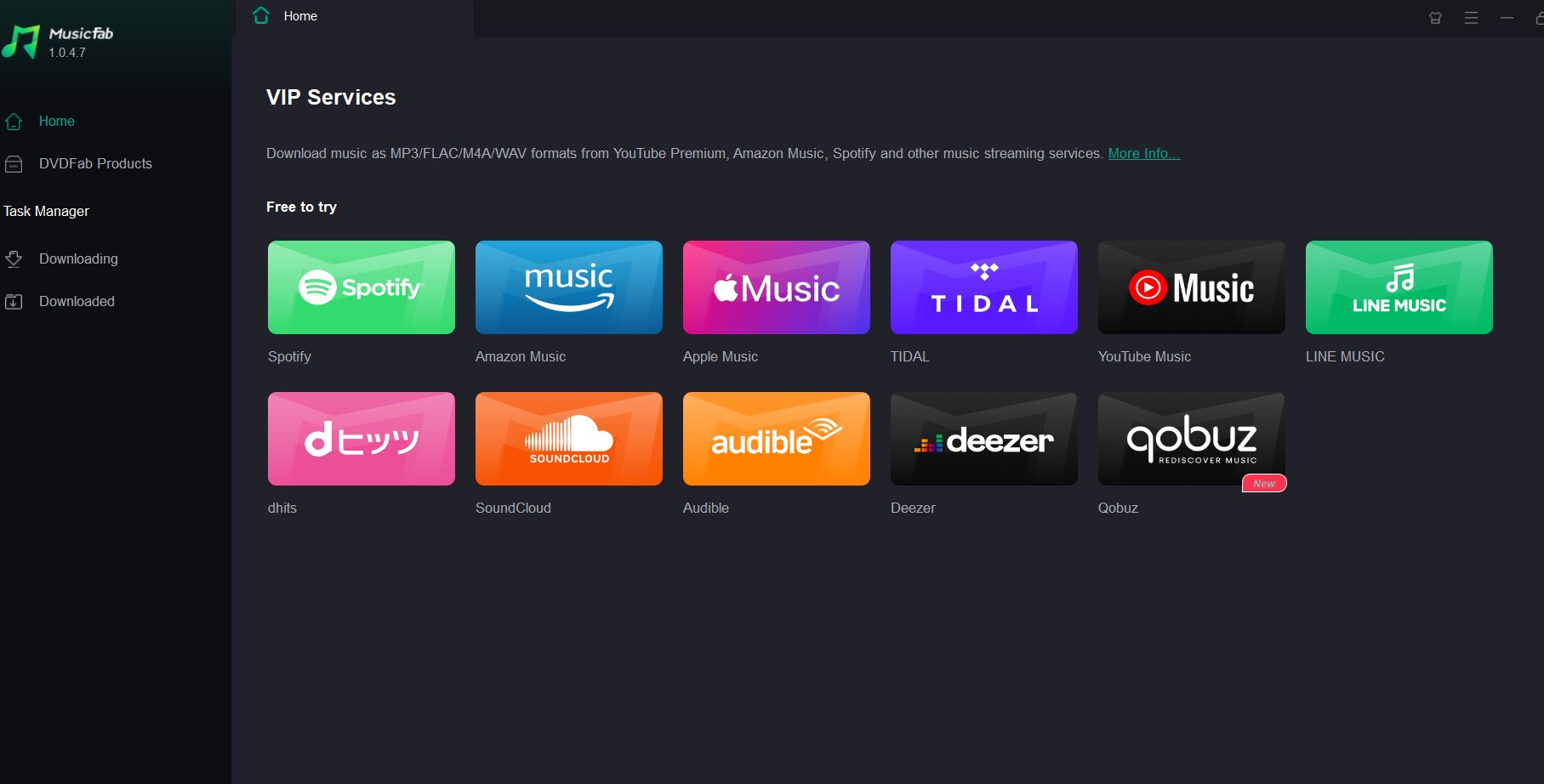
- Open and analyze the music you want. Search for a song, album, or playlist, open its detail page, and use the analysis or download control. In the selection window, review the track list, output format, quality, metadata options, and output path shown by the current version.
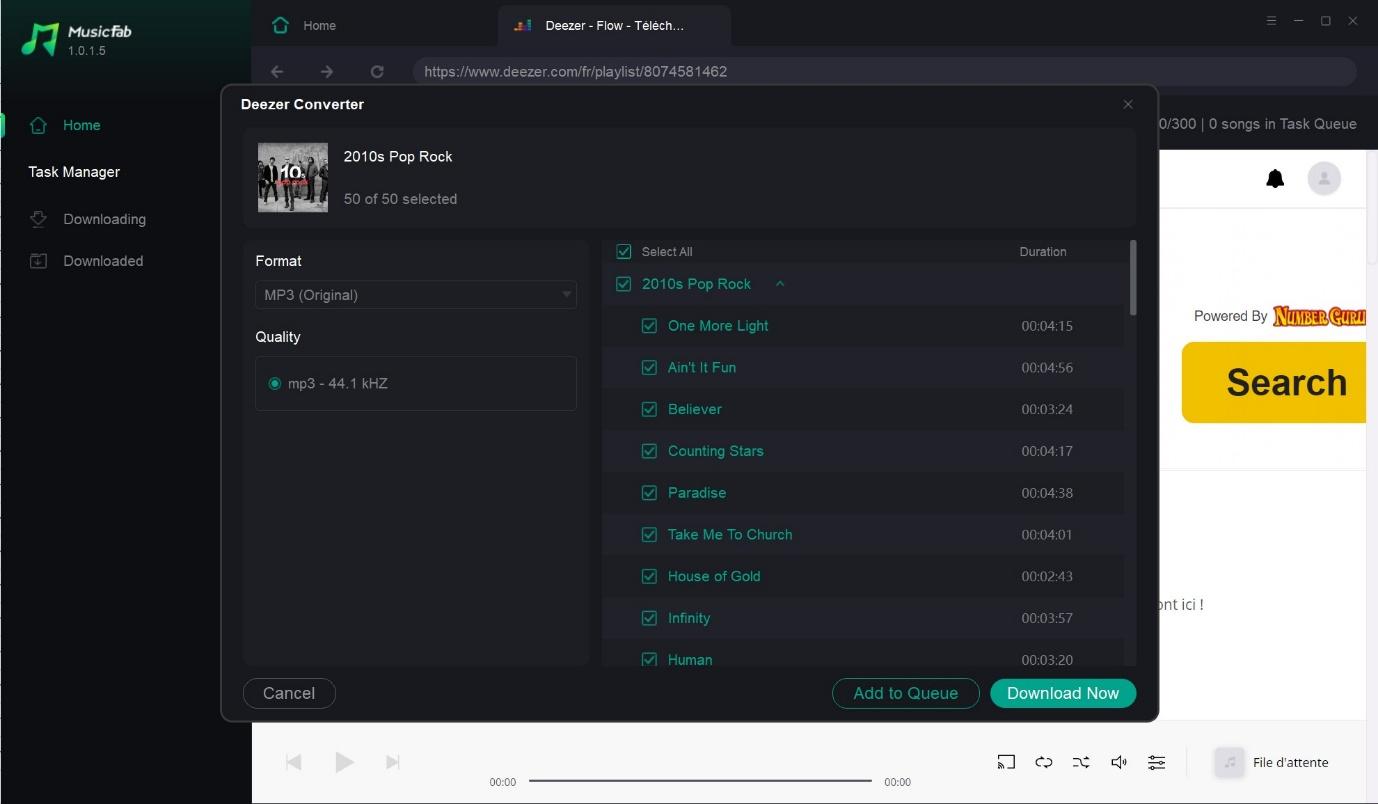
- Start now or add the items to the queue. Use the immediate-download option for the current selection or queue it with other albums and playlists.
- Monitor the task. Check the downloading and completed lists for failed, skipped, or unavailable tracks. Do not assume that adding an item to the queue means the file has completed.
- Inspect the local output. Open the output folder, play several files, and check the title, artist, album, artwork, duration, format, and file size before deleting any source-side playlist or relying on the batch.
This six-step sequence restores the operational detail that was missing from the previous draft. It also separates interface steps from dynamic product specifications, which should be checked in the current application.
Online Music Recorder for TIDAL
An online or desktop audio recorder captures playback in real time rather than processing a playlist as a batch. The original article used Apowersoft as its example. The screenshot and workflow are retained as a dated reference; current browser support, permissions, recording limits, formats, and fees need to be checked with the provider.
- Open the recorder provider's current official page and confirm that your browser and operating system are supported.
- Select system audio as the source when the tool offers that option. Disable microphone capture unless you intentionally need it.
- Choose an output folder and the available format or quality settings before recording.
- Open TIDAL, queue the track you are authorized to record, and pause it at the start.
- Start the recorder, begin playback, and avoid notifications or other system sounds until the track finishes.
- Stop the recording, trim unwanted silence if the tool supports editing, save the file, and play it back to check clipping, interruptions, and metadata.
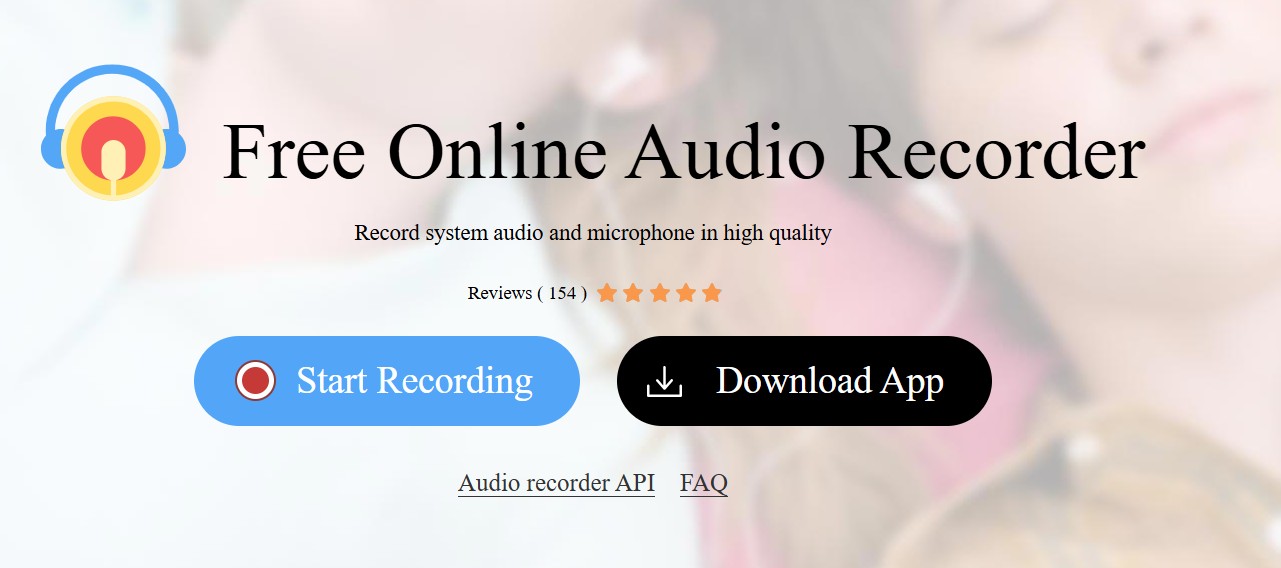
- Best for: an occasional track when real-time recording is acceptable.
- Less suitable for: albums, playlists, unattended batches, automatic metadata, or situations where notifications may enter the recording.
Telegram TIDAL Music Downloader
The original article also referenced Telegram downloader bots. Bot names, availability, commands, output, limits, and safety can change quickly. The steps below are a safety-first description of the historical workflow, not a recommendation of a particular bot.
- Install Telegram from its official source and secure your Telegram account.
- Search for the exact bot name only after finding a trustworthy, current reference. Similar-looking accounts may be impersonators.
- Open the bot profile and review its description, permissions, privacy information, and recent activity before selecting Start.
- Never send your TIDAL password, payment details, authentication code, exported cookies, or other account credentials.
- If the bot accepts a public link, submit only a non-sensitive link and review the returned filename, host, format, and size before downloading.
- Scan the downloaded file, avoid executable or archive files presented as music, and verify the audio before adding it to a library.
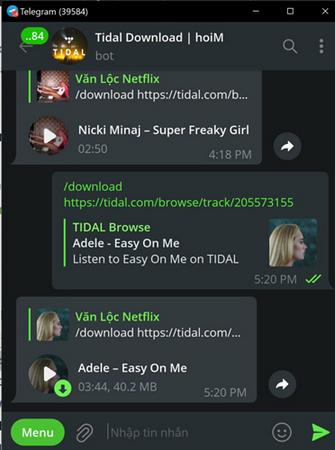
I would not use a Telegram bot for a primary music library. A bot can disappear, change ownership, return the wrong file, or expose the user to misleading links. The official app is safer for app-based offline listening, and a documented computer workflow is easier to audit when local files are required.
Comparison of TIDAL Download Routes
Choose by the result you need rather than by the word “download.” The official app and local-file routes solve different problems.
| Route | Result | Best for | Main limitation |
|---|---|---|---|
| TIDAL mobile app | App-managed offline music | Travel, commuting, and saving mobile data | Content remains inside TIDAL and depends on current account and device rules |
| MusicFab computer workflow | Compatible local audio output | Songs, albums, playlists, queue management, and local playback | Separate software and current product/account requirements |
| Audio recorder | Real-time recording | An occasional track | Slow, manual, and vulnerable to interruptions |
| Telegram bot | Bot-dependent result | Only a cautious, non-sensitive test | Availability, provenance, privacy, file safety, and quality are uncertain |
Common TIDAL Download Problems and Solutions
| Problem | Likely checkpoint | What to do |
|---|---|---|
| Download control is missing | Account eligibility, region, content type, or app version | Confirm the current TIDAL plan and content availability, update the app, and reopen the album or playlist page. |
| Download stays pending | Connection, storage space, mobile network settings, or battery restrictions | Use a stable connection, confirm free storage, review Wi-Fi and mobile network settings, and keep TIDAL active until the item completes. |
| Saved music will not play offline | Incomplete download, device authorization, or account check | Reconnect, open TIDAL, verify completion, and review the current device authorization guidance. |
| MusicFab analysis does not start | Built-in browser state, sign-in, page load, or unsupported item | Reload the service page, confirm account access, reopen the album or playlist, and retry the analysis once. |
| Some queued tracks are missing | Unavailable items, duplicates, selection filters, or failed tasks | Compare the selected list with the completed list and retry only the missing items. |
| Recorded audio contains alerts or silence | Wrong source, notification sounds, or start/stop timing | Select system audio, disable notifications, run a short test, and trim the saved recording if appropriate. |
| Telegram returns an unusual file | Untrusted bot or misleading host | Do not open executables or unknown archives. Delete the result and stop using the bot. |
Frequently Asked Questions
Can you download music from TIDAL for offline listening?
Yes. When your account, region, device, and content are eligible, the TIDAL mobile app can save music for offline playback inside the app.
Are TIDAL app downloads ordinary local music files?
No. Official downloads are managed by TIDAL for playback in its app. They should not be described as a transferable MP3 folder.
How do I confirm that a TIDAL mobile download is complete?
Open TIDAL's Downloads or offline section, check that the item no longer shows as pending, then briefly disable connectivity and play a saved track inside the app.
How do I download a TIDAL playlist with MusicFab?
Open TIDAL in MusicFab's built-in browser, sign in when required, open the playlist, start analysis, review selected tracks and output settings, then download immediately or add the selection to the queue. Verify the completed files afterward.
What should I do when some tracks fail in a batch?
Compare the selected track list with the completed list, identify unavailable or failed items, and retry only those tracks after confirming account access and the current service page.
Conclusion: Use the Route That Produces the Right Result
Use TIDAL's official mobile controls when you need reliable offline playback inside the app. Use a separate computer workflow when you specifically need compatible local audio files, and follow the complete selection, queue, completion, and verification steps rather than stopping after the download button. Reserve recording tools for occasional manual use, and treat Telegram bots as unverified services that should never receive account credentials.

Compare a desktop batch converter, mobile bot, open-source option, and real-time online recorder to convert TIDAL to MP3 and turn a TIDAL playlist to MP3 in 2026.
By Jane Chen - Aug 14, 2026