
4 Ways to Convert TIDAL to MP3 in 2026 (Playlists Included)

Here's the short answer: TIDAL's built-in offline files are encrypted app cache, not exportable MP3s for a car stereo, DJ set, or Walkman. To convert TIDAL to MP3 or a TIDAL playlist to MP3, use a separate method. For playlists, a desktop batch converter is usually the clearest fit.
I manage a personal library of a few hundred TIDAL tracks that I want to download from TIDAL into portable files, so I've run every method below against real playlists. This guide covers four routes to convert TIDAL to MP3: a desktop batch converter, a Telegram bot, an open-source CLI, and a real-time online recorder. Their reliability and fit differ sharply. I'll explain the tradeoffs for each.
Table of Contents
TIDAL to MP3 Methods at a Glance

- Desktop batch converter — MusicFab TIDAL Converter
- Direct-source workflow for full playlists and albums. Fit for readers building a real local library. Not ideal if you only need one track and don't want to install anything.
- Telegram TIDAL bot (mobile, unverified)
- Handy for a one-off single track on Android or iPhone. Ownership, security, and current uptime cannot be verified for any specific bot. Not ideal for private accounts, large playlists, or reliable metadata.
- Tidal-Media-Downloader (open-source CLI)
- Free and scriptable, but the original repository has an unresolved authentication/API-key failure reported in March 2026. Fit only for readers willing to troubleshoot. Not ideal if you need a first-run success.
- Apowersoft Free Online Audio Recorder (real-time)
- Captures system audio in real time inside a browser, not a direct downloader. Fit for one short track when you can't install software. Not ideal for albums, playlists, or clean metadata.
My honest take: for a batch of TIDAL playlists into MP3, only the desktop route is dependable in 2026. The other three each have a narrow window where they help.
MusicFab for Batch TIDAL MP3 Downloads
For content you're authorized to access, where permitted by platform terms and applicable copyright law, MusicFab TIDAL Converter can save a local copy of your TIDAL library for personal offline listening. That's the honest framing before I list what it actually does well.
Three things make this the route I actually use for a large library: it pulls the audio through direct-source download at up to 20x, it batches whole playlists and albums into MP3 (or FLAC / WAV if I want lossless), and it writes ID3 tags, artwork, and .lrc lyrics into every file so a 200-track queue lands sorted, not as "Track 01" chaos. Available source quality still depends on your TIDAL plan and playback settings.

- Direct-source download of TIDAL tracks at up to 20x, output as MP3 up to 320 kbps or lossless FLAC / WAV
- Batch queue for full playlists, albums, and podcasts
- Preserves ID3 tags, cover art, track order, and .lrc lyrics
How to Convert a TIDAL Playlist to 320kbps MP3
Prerequisites: a TIDAL account with access to the music you plan to convert, MusicFab on Windows or macOS, and an output folder with enough available space.
For a large library, clean batching and correct metadata matter more than a headline speed number. Here's how I run a full playlist end to end.
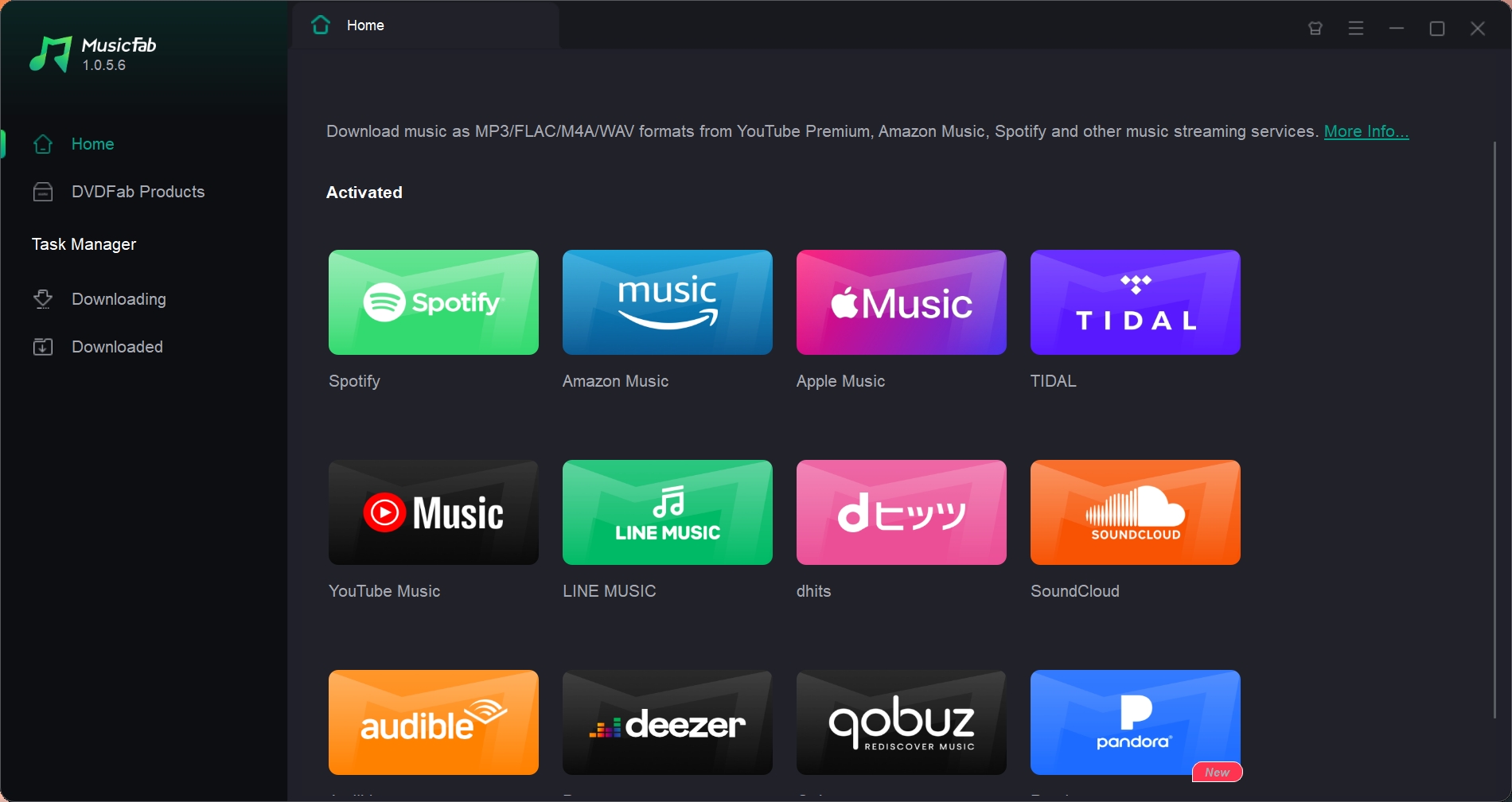
Step 1: Open MusicFab and pick the TIDAL card from the source list.
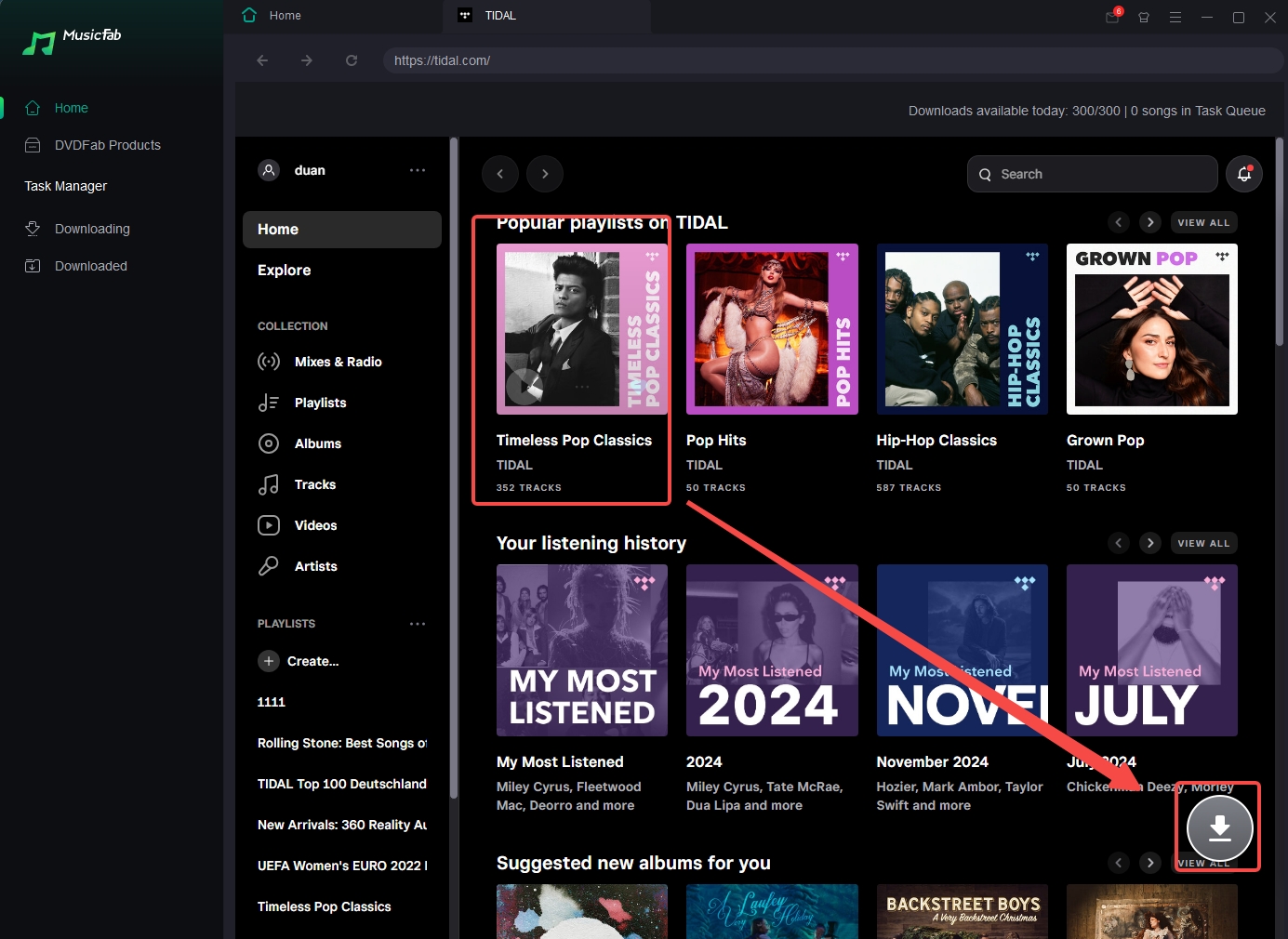
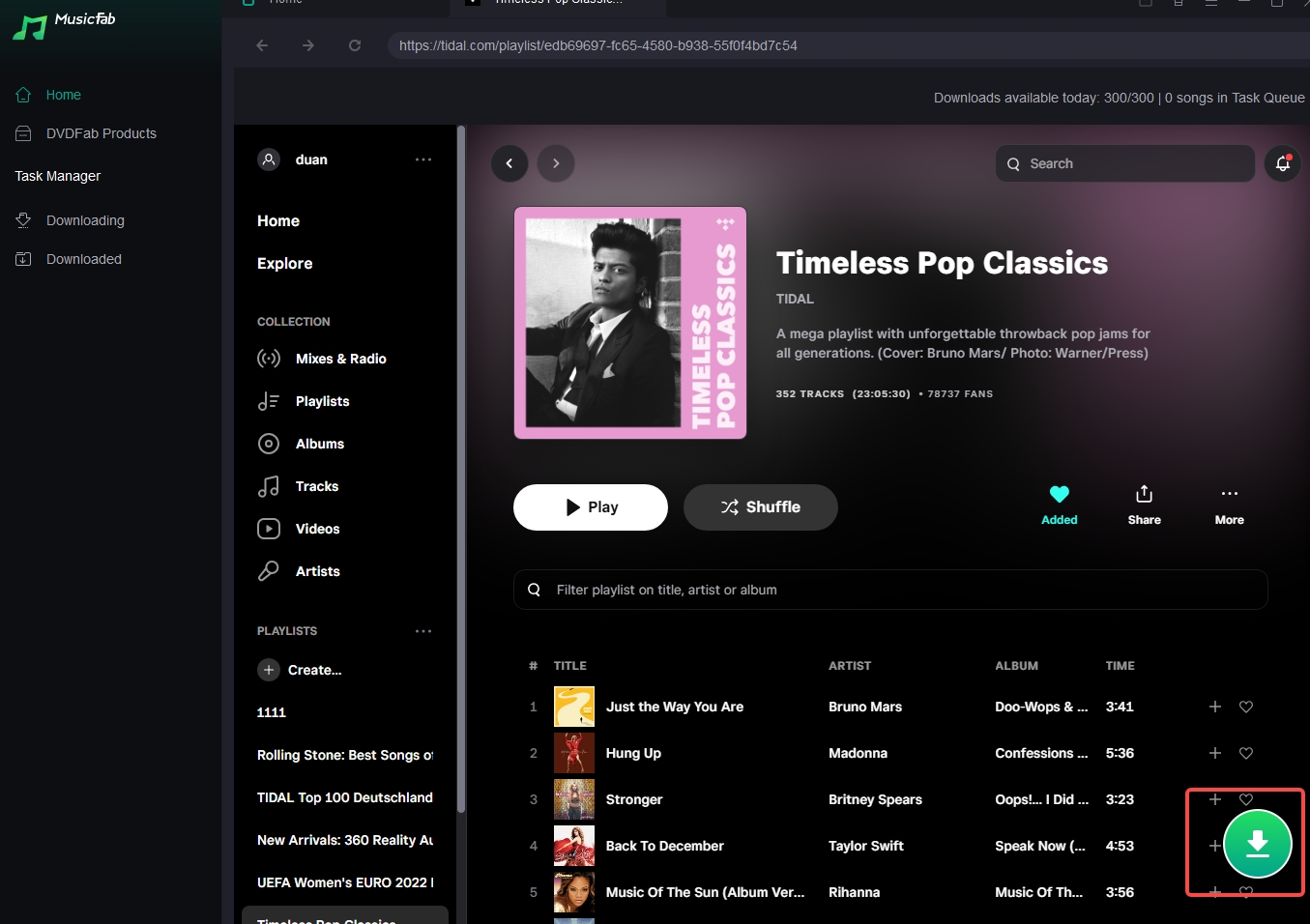
Step 2: Sign in to TIDAL inside the built-in browser, open the playlist or album you want, then click the green download arrow at the bottom-right to queue every track in that playlist at once.
Step 3: In the pop-up, set the output format to MP3 and the bitrate to 320 kbps (or pick FLAC / WAV for lossless), confirm the output folder, then click Download Now. The queue processes the whole playlist in one pass.
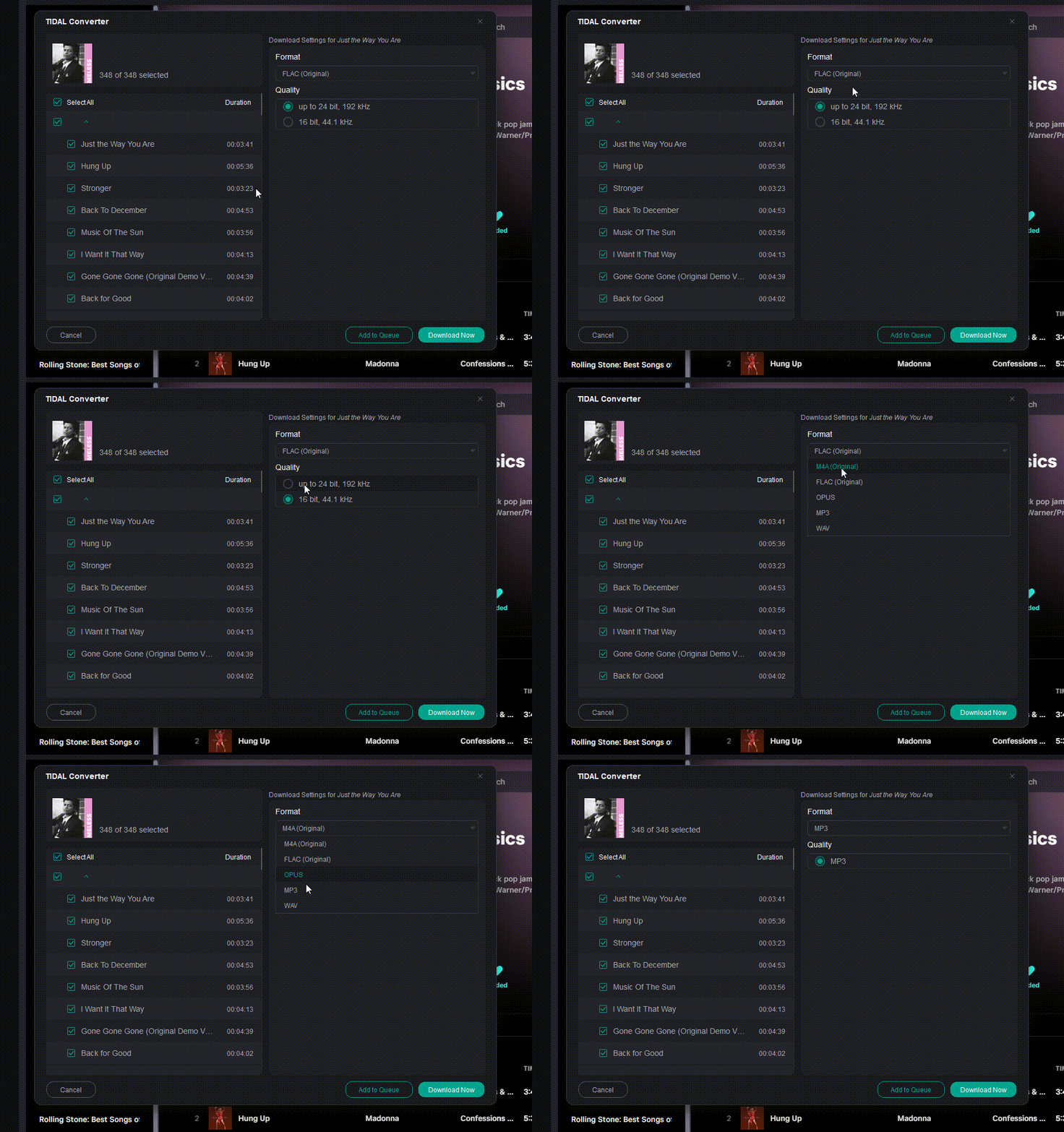
Step 4: Watch progress in the Task Manager. When it finishes, the output folder opens automatically — spot-check that track order matches the playlist, and that titles, artist, album art, and lyrics are attached to each file.
Telegram TIDAL Bots: Convenience and Risks
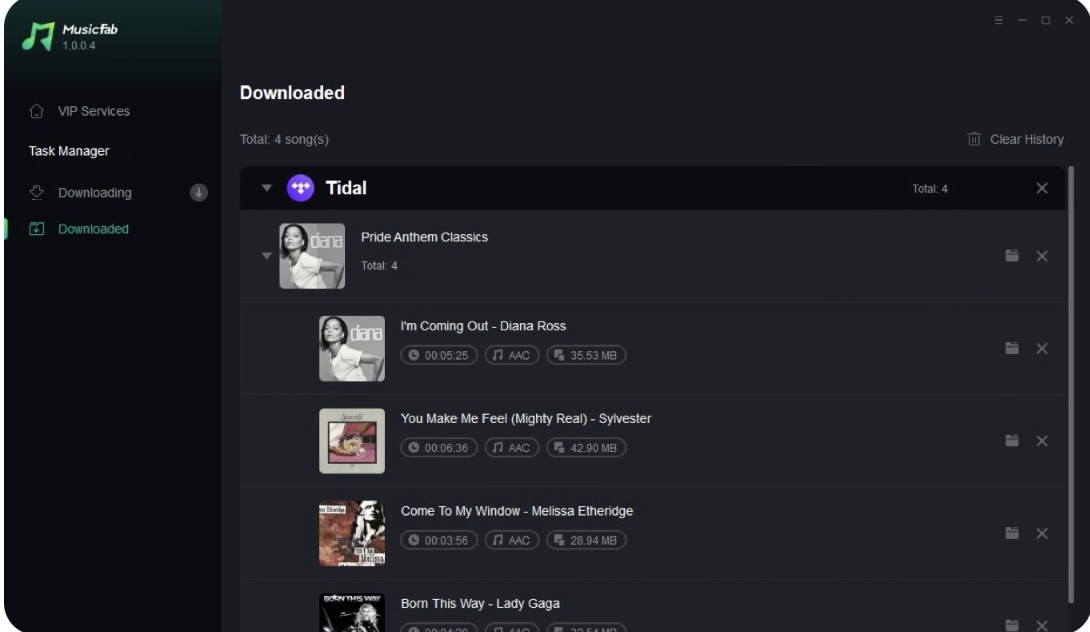
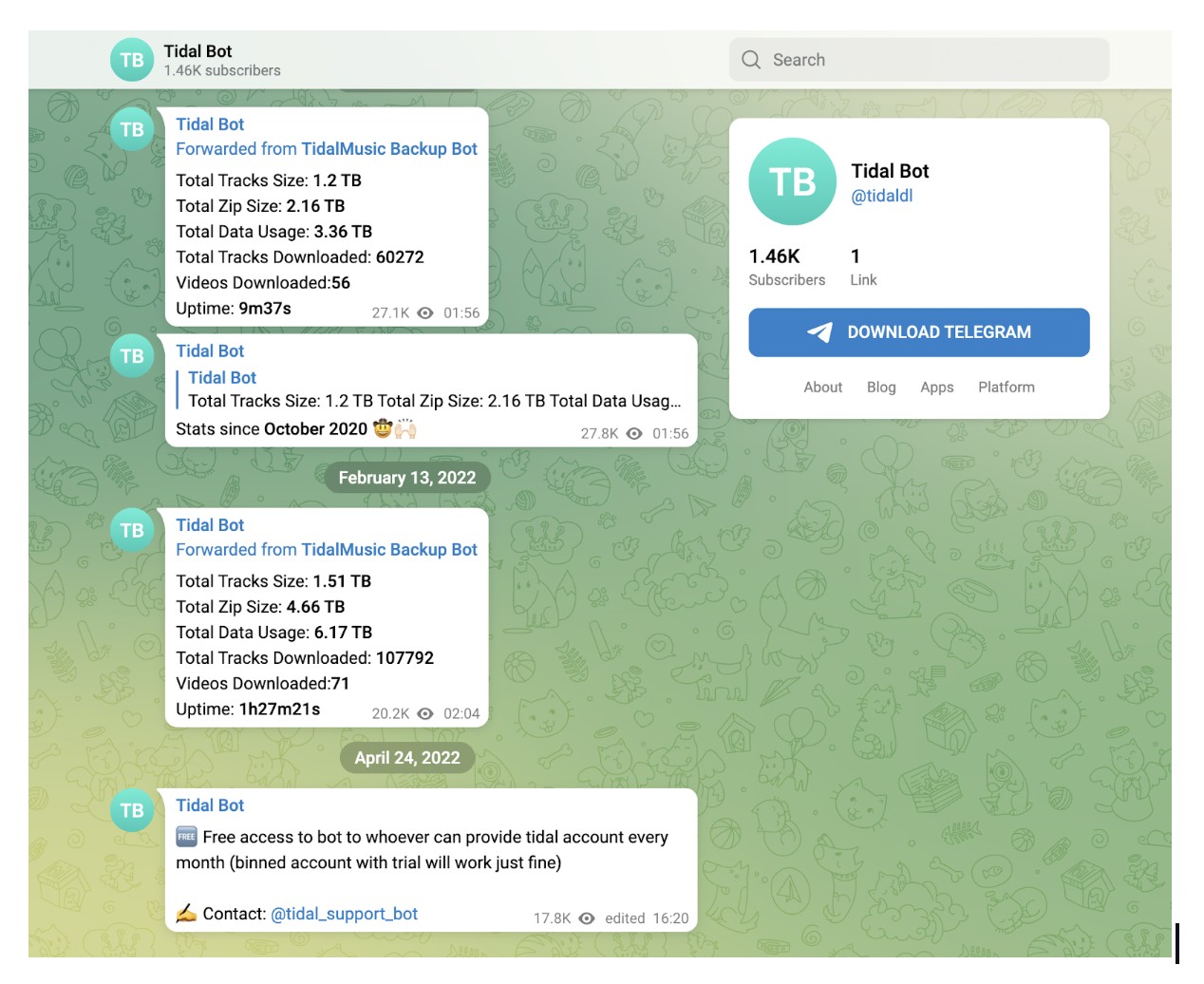
Telegram bots claiming to fetch TIDAL tracks circulate widely on Android and iPhone. I keep them on the shortlist for one reason only: sometimes I just want a single track on my phone without opening a laptop. Everything else about them is a shrug — ownership, code, uptime, and output quality cannot be verified for any specific bot, and bots get shut down, renamed, or replaced by lookalikes constantly.
Fit for: an occasional single-track lookup on mobile when you've accepted the tradeoffs.
Not ideal for: your primary TIDAL account, large playlists, accurate metadata, or predictable quality.
Pros
- No software installation or account creation hassle
- Search your songs using metadata like artists' names, albums, links, etc
- Compatible with mobile devices
Cons
- All the telegram bots are not working properly
- There is a risk of malware infection
- It doesn't support batch processing, and you have to save Tidal track one by one
- Wrong metadata provides misleading information about the Tidal track
- Output format, bitrate, and any free-use limit vary by bot and are unverified
- Some bots have downloading limits
How Telegram bots typically work
- You search Telegram for a TIDAL-related bot. There is no way to confirm any specific bot is "the authentic one" — treat them all as unverified.
- You tap Start. Some bots ask for a TIDAL link only; others ask to link an account. If a bot demands your TIDAL password or full login, walk away — there is no legitimate reason it needs your credentials.
- You send a command such as /search or /download with a TIDAL link or track name.
- If the bot returns a file, you download it and verify the format, bitrate, and tags manually — assume nothing is correct until you check.
Tidal-Media-Downloader: Current Reliability Limits
Before you invest an evening in this: the original Tidal-Media-Downloader repository has an unresolved authentication / API-key failure reported in March 2026, and end-to-end reliability in 2026 is uncertain. Community forks exist, but a fork working does not verify the original repo works. I've had it succeed and I've had it dead-end at login on the same machine a month apart.
If you're still curious, it's a Python CLI (with a GUI wrapper) that in principle downloads TIDAL tracks straight to MP3 or FLAC. Setup involves installing Python, dependencies, and pasting a device code back into TIDAL to authorize.
Fit for: readers comfortable troubleshooting Python, tokens, and API changes.
Not ideal for: anyone who needs a working first run without side quests.
Pros
- Free tool
- Two dedicated versions available like, Tidal-DL & Tidal-GUI
- Metadata-saving option
- Supports Windows, Linux, Mac, and Android
Cons
- High technical barrier
- Prone to errors when Tidal updates its API
- Requires a Tidal premium subscription to download tracks
- Misleading metadata issues often occur
Step to Convert Tidal to MP3 For Free With Tidal-Media-Downloader (GitHub)
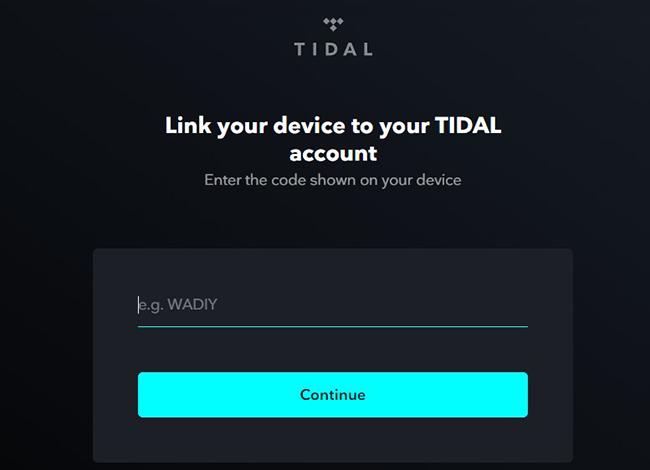
- Step 1: Install the tool on your desired device by following the instructions > after that, open the tool and get a code for your device > open your Tidal account and give permission to the device to use the account by putting in the device code.
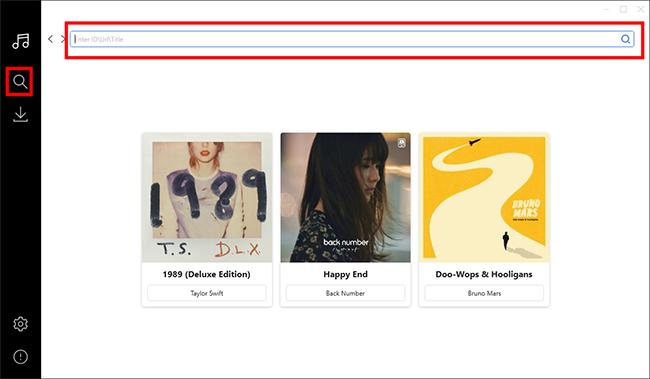
- Step 2: Open the Tidal Web Player > select and copy the link of the Tidal track that you wish to keep offline > paste the link in the input bar of Tidal-GUI. Select the “Search” button to add the pasted content to the tool.
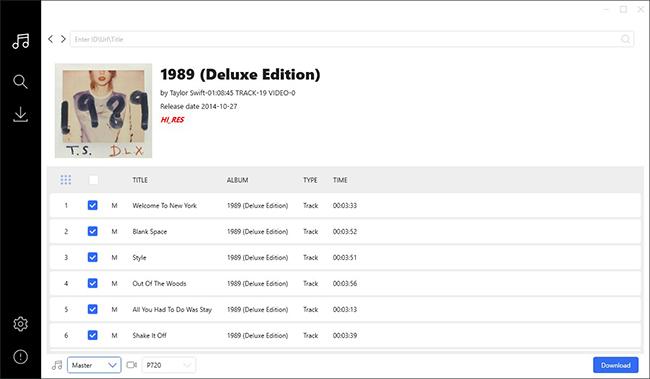
- Step 3: A pop-up window panel will appear to show all the added songs > you can select the output quality like Low/High/Max; Max corresponds to HiRes FLAC > select the “Download” button to get the tidal track for offline seamless offline streaming.
Free Online Recorder, Not a Direct TIDAL Downloader
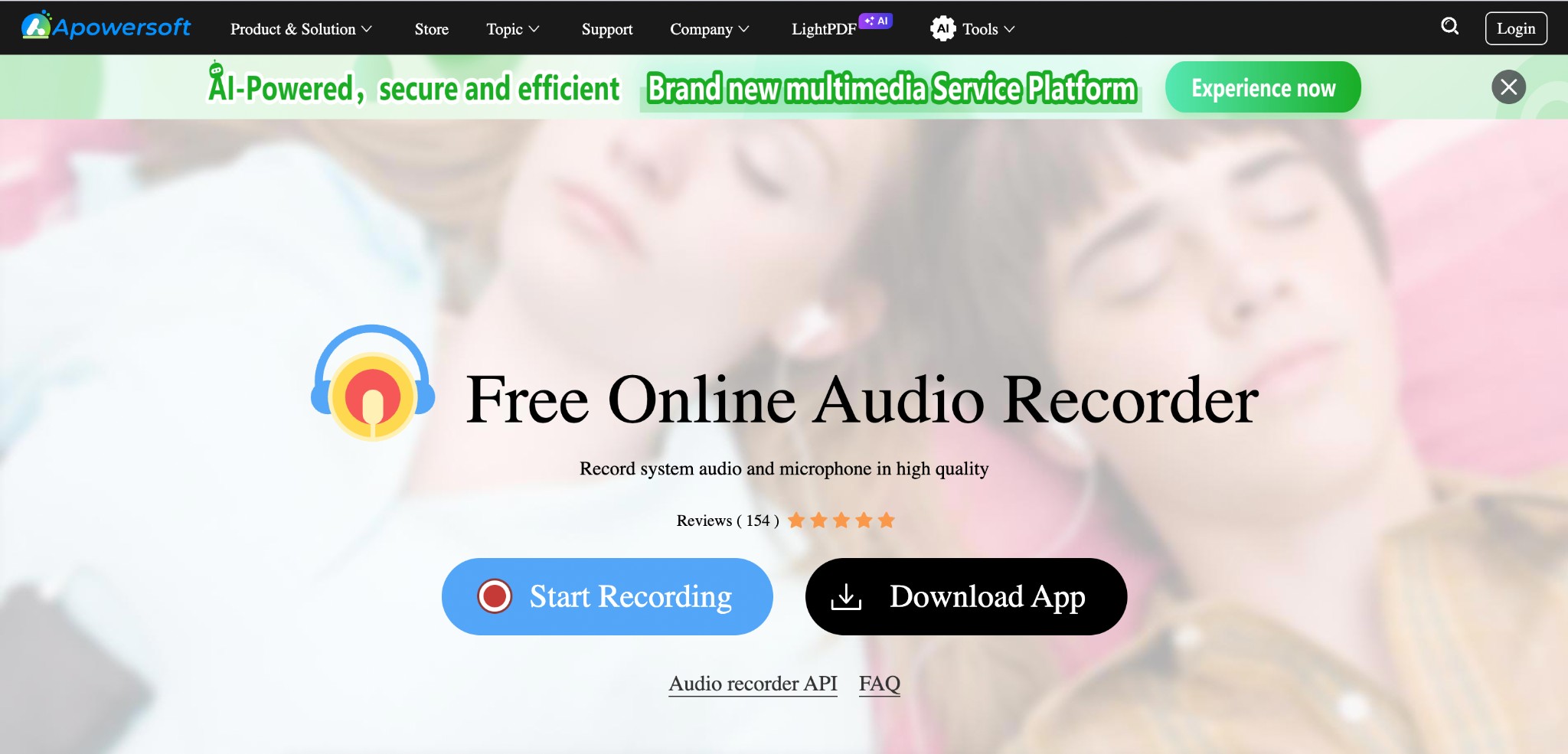
Apowersoft Free Online Audio Recorder is a real-time system-audio capture tool that runs in your browser — it is not a direct TIDAL downloader. A five-minute song takes about five minutes to capture (there is no 20x here, it's 1x by definition). Browser and system-audio support varies by OS, long sessions can drop, and titles, artist, artwork, lyrics, and playlist order almost always need manual cleanup afterward.
Fit for: one short track when installing software isn't an option.
Not ideal for: albums, playlists, or any library where metadata matters.
Pros
- It can record a microphone or your system sound
Cons
- Requires a browser launcher / extension to capture system audio
- Real-time capture: a five-minute song takes five minutes
- Metadata (title, artist, artwork, lyrics, order) needs manual cleanup
- Long sessions can fail; not suitable for full albums or playlists
Steps to Save Tidal to MP3 Online With Apowersoft Free Online Audio Recorder
- Step 1: Open the official website of the Apowersoft program > select the “Start Recording” option > choose the “System Sound” as the audio source > then select the “Start Recording” option one more time.
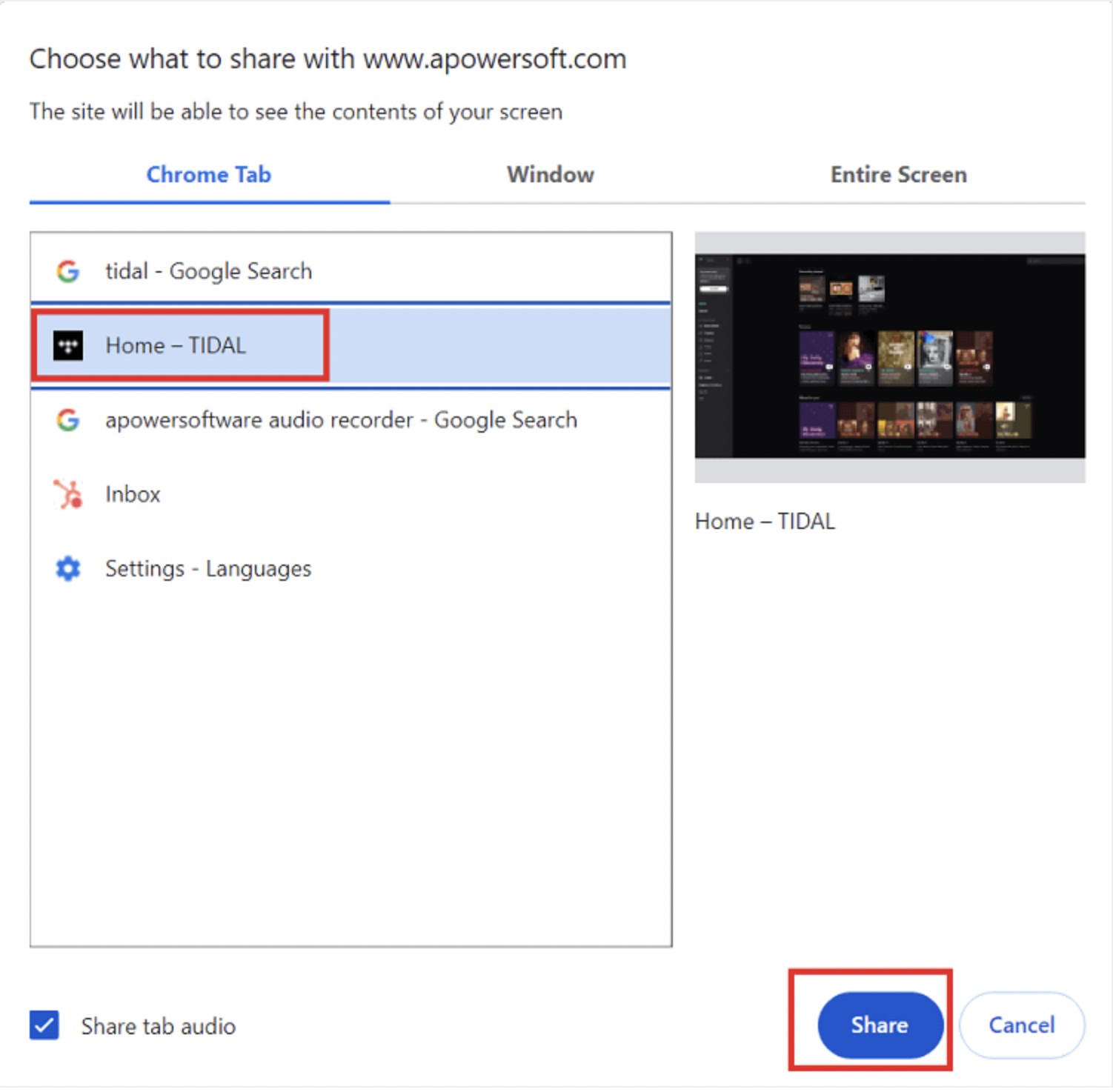
Step 2: In a pop-up window, you will be asked to share your content screen while using the Tidal desktop app or Web player > play the Tidal track you want to save to MP3.
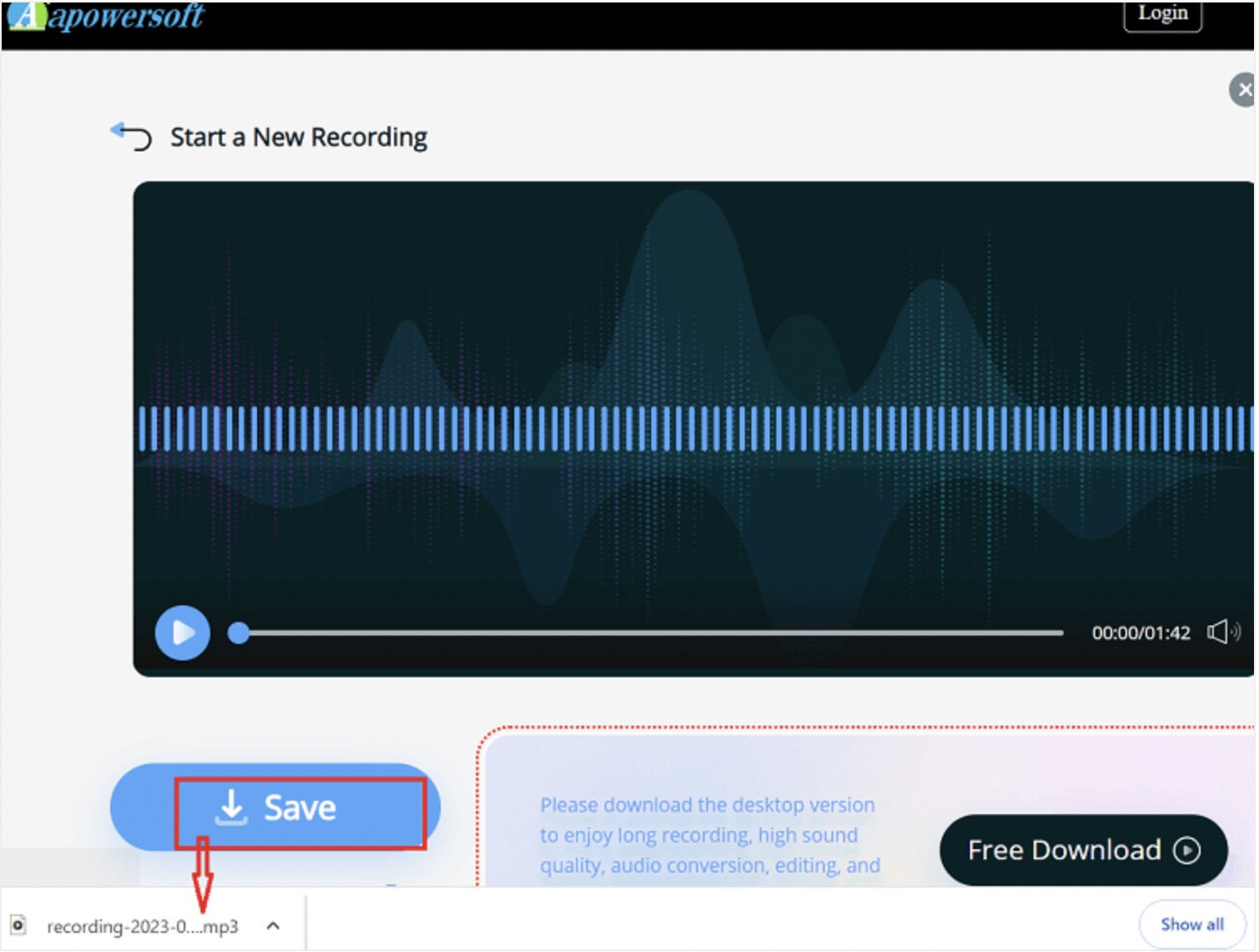
Step 3: Once the recording is over, select the “Save” option to save the Tidal track recording in MP3 file format.
TIDAL Converter Comparison: Quality, Limits, and Reliability
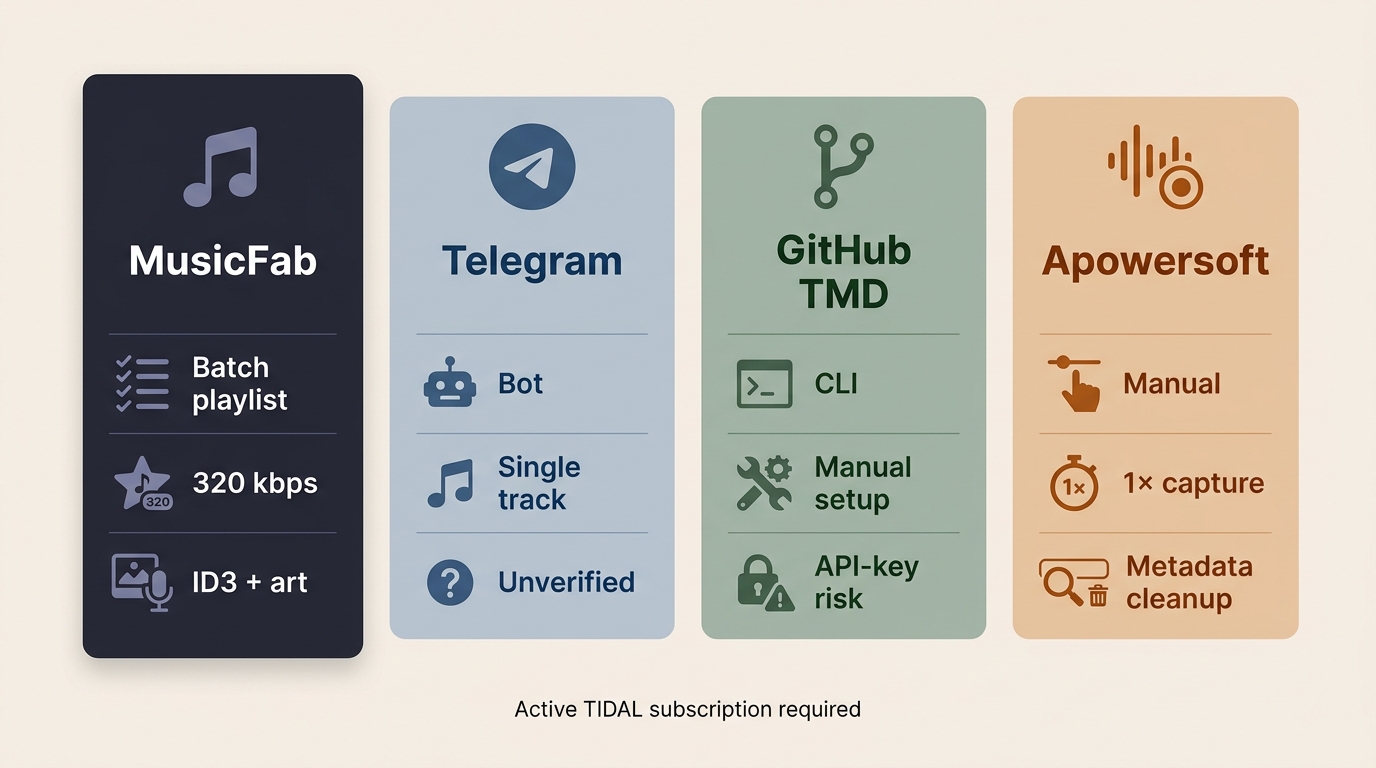
Set side by side on the dimensions that decide the choice: TIDAL account requirements, trial limits, batch support, output quality, TIDAL metadata preservation, workflow type, and current reliability. MusicFab's trial includes three full songs per service, as of August 2026.
| Method | Account and free use | Output and workflow | Library handling and fit | MusicFab TIDAL Converter | Authorized TIDAL access; 30-day trial, 3 songs | Direct-source download; MP3 up to 320 kbps | Playlist batches; ID3 and .lrc lyrics |
|---|---|---|---|---|---|---|---|
| MusicFab Tidal Converter | MusicFab TIDAL Converter | Windows and macOS | FLAC, WAV, M4A, or OPUS | Supported desktop workflow; libraries | Telegram TIDAL bots | Varies by bot; free use unverified | Unverified mobile workflow; format varies |
| Telegram Tidal Bot | No verified batch support; one track | Telegram TIDAL bots | Mobile availability varies | Quality and metadata unverified | Not for private accounts or libraries | Tidal-Media-Downloader | TIDAL authorization; build status varies |
| Tidal-Media-Downloader (GitHub) | CLI or GUI wrapper; MP3/FLAC unverified | Batch and metadata build-dependent | Tidal-Media-Downloader | Windows, macOS, Linux, Android | Authentication/API-key reliability uncertain | For troubleshooters, not first-run reliability | Apowersoft Free Online Audio Recorder |
| Apowersoft Free Online Audio Recorder | Playback access; free-use limits vary | Real-time system-audio capture | No playlist batch; manual metadata cleanup | Apowersoft Free Online Audio Recorder | Browser and system-audio support varies | MP3 output; quality depends on capture | One short track, not albums or playlists |
My practical read: choose MusicFab for playlist batches where track order and metadata matter; use an unverified Telegram bot only for an occasional mobile lookup, Tidal-Media-Downloader only if you can troubleshoot, and Apowersoft only for a short real-time capture, not a library.
FAQs
Is it legal to convert TIDAL music to MP3?
It depends on your local laws and how you use the files. In general, converting music for personal offline listening is treated differently from sharing or redistributing files. Always respect copyright law and TIDAL’s Terms of Service, and never upload or distribute converted tracks.
Does converting Tidal to MP3 affect the sound quality?
Yes, some. MP3 is a lossy format, so output can never exceed the source: a TIDAL HiFi Plus master converted to 320 kbps MP3 sounds noticeably tighter than a 128 kbps rip, but it's still below the FLAC original. In practice, most perceived quality gaps in casual listening come from Bluetooth codecs (SBC vs. LDAC), playback volume, and headphone chain, not the MP3 itself. If you want a true 1:1 copy and your plan supports it, export to FLAC or WAV instead — the files are larger but bit-perfect.
Is it safe to use a Tidal to MP3 converter?
Safety depends on the specific tool, not the category. Before running any TIDAL converter, run this checklist: (1) can you name the vendor and find a real product page or a maintained public repo? (2) does the installer come from that official source, not a random mirror? (3) does the tool ask for your TIDAL password directly, or does it route login through TIDAL's own sign-in page — the second is safer? (4) what permissions does it request on your system, and do they match its stated job? (5) scan the installer, and treat any unnamed bot or unsigned build as unverified rather than trusted by default.
Conclusion
The right way to convert TIDAL to MP3 depends on how often you download music and how much control you need over the process. For an occasional track, a free recorder or mobile tool may be enough, but these options usually involve more manual work and may offer limited metadata, batch support, or output quality.
If you regularly save albums or playlists, a desktop converter such as MusicFab provides a more streamlined workflow with batch downloading, 320 kbps MP3 output, and preserved metadata. Command-line tools such as Tidal-Media-Downloader can also work well for users who are comfortable with a more technical setup.

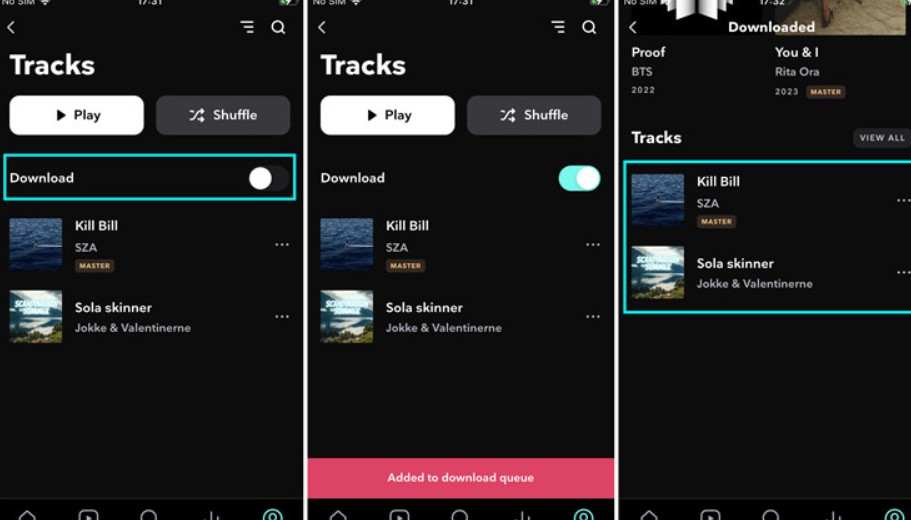
Learn how to download TIDAL music in the mobile app or through a local-file workflow, with complete steps, troubleshooting, and clear limits.
By Jane Chen - Aug 9, 2026