How to Download Podcasts on iPhone, Android, Mac, PC, or as MP3

Summary: Podcast downloads fall into two categories: app-managed offline copies and portable audio files. This guide covers free publisher and RSS links, current iPhone and Android app workflows, bulk and retention limits, a platform comparison, and an authorized MusicFab desktop workflow for saving local files.
Table of Contents
If you are searching for how to download podcasts, first decide what ‘download’ should mean: use an app to download podcasts offline or save a portable audio file you can move. This guide covers both routes on iPhone, Android, Mac, and PC.
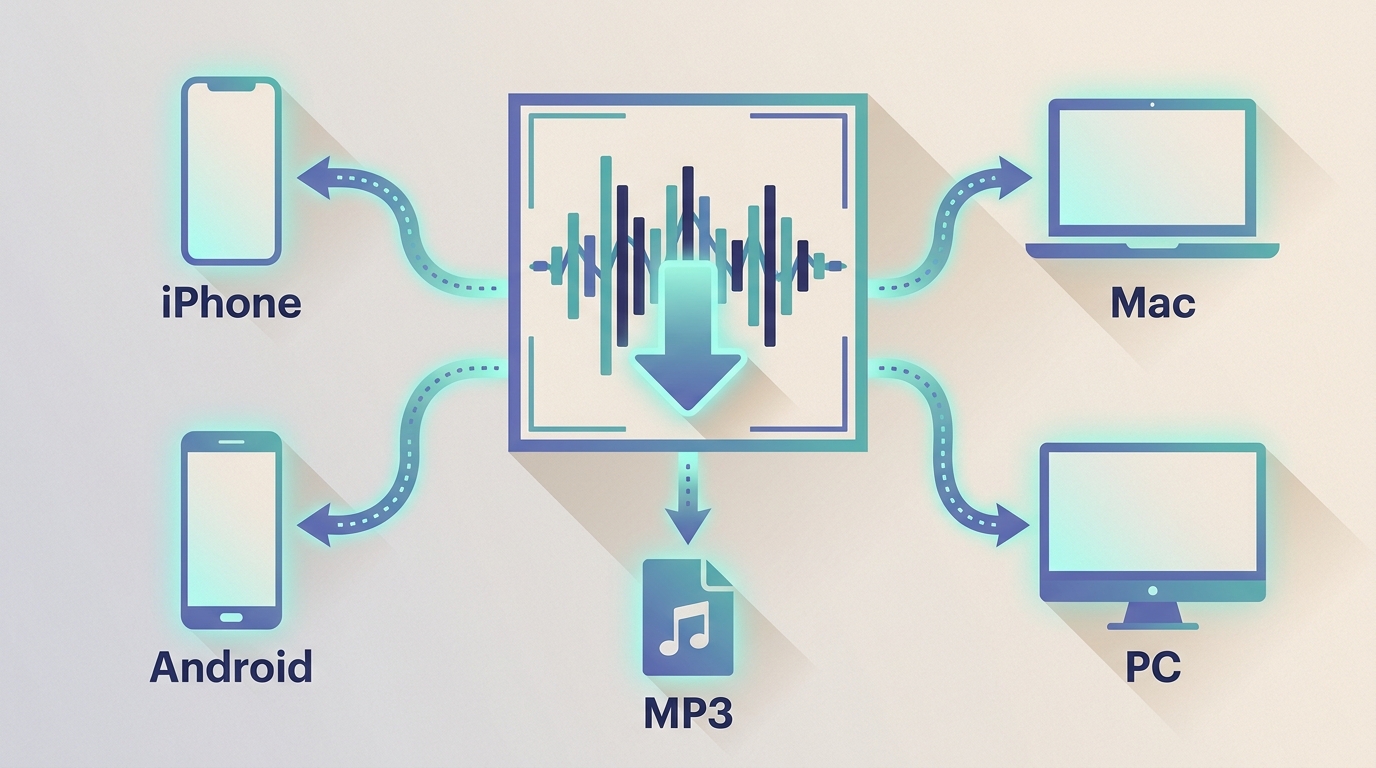
Start with free publisher links or RSS when you need a file, use podcast app downloads for simple offline listening, and consider a desktop workflow only when you need an authorized local MP3.
Choose an Offline Copy or Portable File
The right method depends on whether you want convenient playback inside an app or a file that works in a folder, MP3 player, note-taking tool, or compatible desktop program.
In-App Offline Downloads
An in-app download stays under the podcast app's control. It is designed for offline playback in that app, not for browsing as a normal audio file or transferring freely to unrelated software.
- Playback: Open the same app and use its Downloads or Library area.
- Transfer: The offline copy normally cannot be dragged into another player.
- Best fit: Flights, commutes, weak coverage, and listeners who already use one podcast app.
Portable MP3 and Audio Files
Portable podcast files are stored in a folder and opened by compatible devices or software. If your goal is to download podcast MP3 audio for an MP3 player, transcription, notes, or an authorized archive, this is the outcome to look for.
- Playback: Use a compatible media player rather than the source app.
- Transfer: Copy the file between folders or supported devices.
- Best fit: Desktop organization, standalone players, and workflows that need a known file location.
My practical rule is simple: choose app downloads for easy listening, and choose an accessible file only when the file itself is part of the job.
Free Podcast Downloads From Publishers and RSS
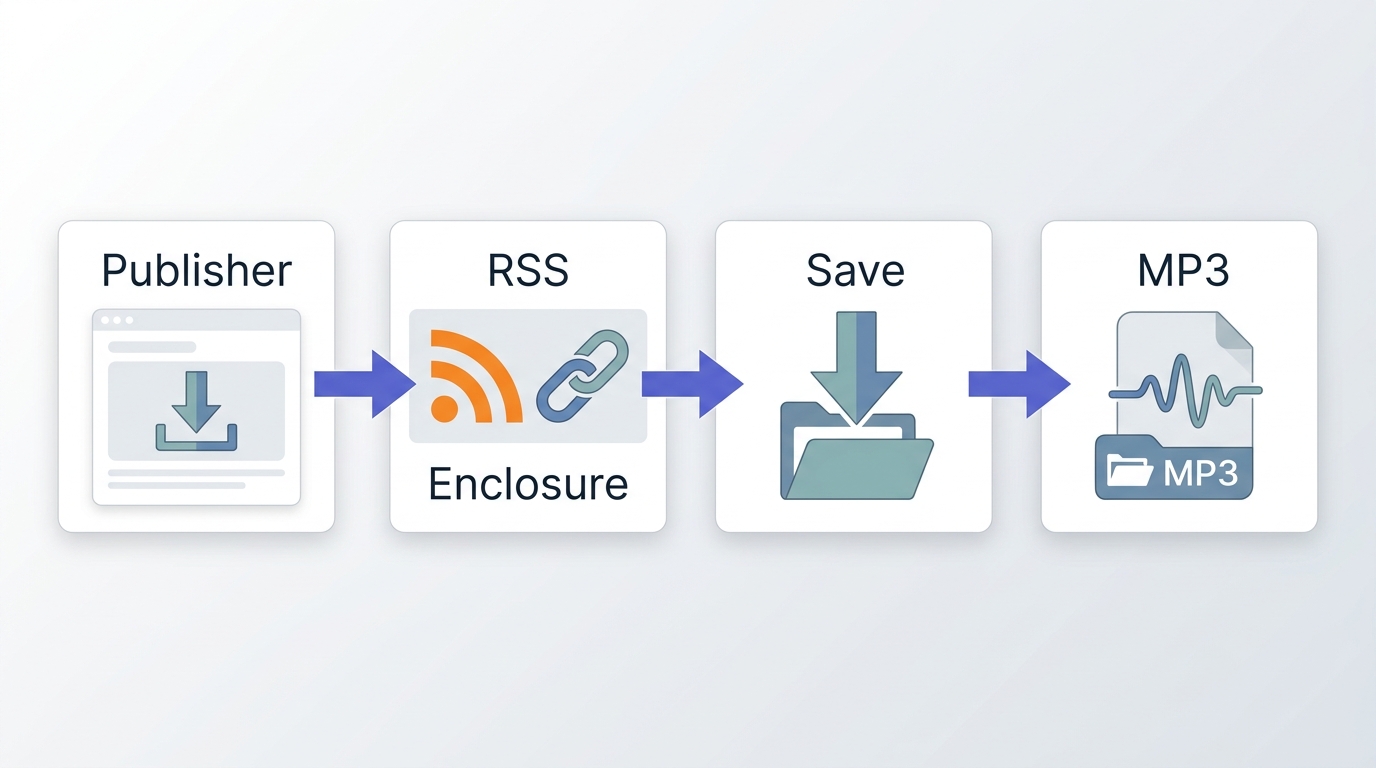
A publisher page or RSS feed is the first free route to try when you need an actual audio file. It works only when the show owner exposes a download link or audio enclosure.
Publisher Download Links
Some public podcasts place a download, MP3, or audio link on each episode page. When that link exists, you can save the episode directly without a converter.
- Open the podcast's official website and select the episode.
- Look near the player or episode notes for a download or audio link.
- Open the link, then use the browser's save control to place the file in a chosen folder.
I try this route first because it is direct, free, and controlled by the publisher. If no file link appears, move to the show's RSS feed or an app-managed download.
RSS Audio Enclosures
A podcast RSS download uses the audio enclosure attached to an episode entry. Not every feed makes that link easy to reach, but a public enclosure can point directly to the episode's audio file.
- Find the show's official RSS feed on its website or in a podcast directory that displays feed details.
- Open the feed in a browser or RSS reader and locate the episode title.
- Open the episode's audio enclosure or media URL.
- Save the audio file to a folder and keep its original extension unless you have a specific compatibility need.
Use publisher-provided files for personal, authorized listening, and respect any conditions stated by the show owner.
App Downloads by Platform
Podcast app downloads are the simplest choice when you only need offline playback. The controls are similar across services, but device support, automation, and retention rules differ.
Apple Podcasts on iPhone and Mac
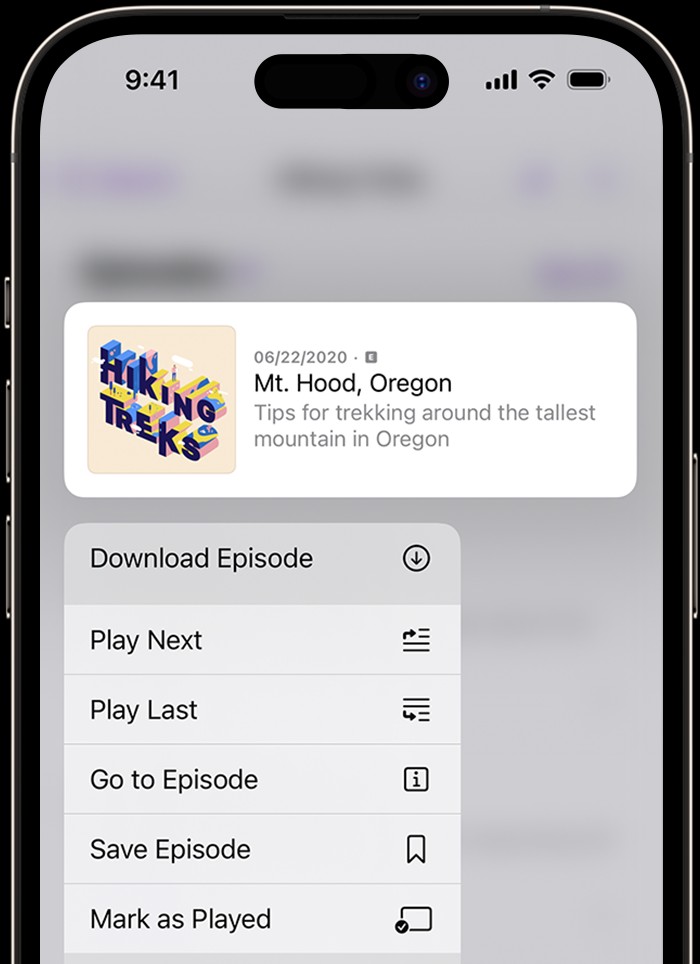
To download podcasts on iPhone or Mac with Apple Podcasts, save individual episodes or enable automatic downloads for followed shows. The resulting copies remain managed inside the Podcasts app.
On iPhone or iPad:
- Open Podcasts and find a show or episode.
- Tap the download arrow beside the episode, or touch and hold the episode and choose Download Episode.
- Open Library and select Downloaded to find offline episodes.
On Mac:
- Open Podcasts and locate the episode.
- Click the download button or use the episode menu and choose Download Episode.
- Use the Downloaded area in the Library to manage saved episodes.
For new releases, open the show's settings and enable automatic downloads. Deleting a downloaded episode does not require unfollowing the show.
Android Podcast Apps
To download podcasts on Android, use a current podcast app such as Pocket Casts, Podcast Addict, or AntennaPod. One shared workflow covers the core task without duplicating nearly identical app instructions.
- Install the app, search for the show, and follow or subscribe to it.
- Open an episode and tap its download control.
- Use the app's Downloads area to play offline and manage storage.
Pocket Casts suits listeners who want polished storage and bulk controls, Podcast Addict offers extensive organization options, and AntennaPod is a strong fit for readers who prefer an open-source app.
Spotify
Spotify podcast downloads are available without a Premium music subscription. Episodes can be downloaded in the mobile or desktop app, but users must reconnect at least once every 30 days to keep downloads active.
- Open Spotify and find the podcast episode.
- Select the download arrow or choose Download from the episode menu.
- Wait for the downloaded indicator, then open Your Library to play it offline.
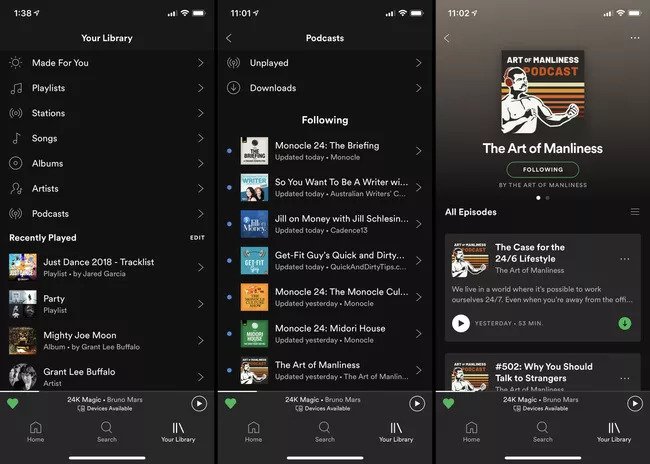
Spotify is convenient when music and podcasts already share one library. Readers who need a local file for an authorized desktop use can follow the dedicated Spotify podcast to MP3 workflow instead of treating the app download as a portable file.
YouTube Music
YouTube Music lets users download podcast episodes regardless of membership status. Podcast rules differ from music rules: full-show downloads and Smart Downloads are not available for podcasts.
- Open the YouTube Music app and choose a podcast episode.
- Tap the episode's download control.
- Open Library and use the downloaded-content view for offline playback.
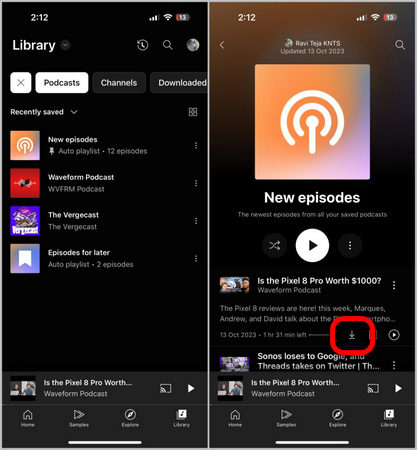
This route fits listeners who already follow video or audio podcasts in YouTube Music, but it is not designed for downloading an entire show at once.
Audible and Amazon Music
Audible and Amazon Music provide app-managed podcast downloads on supported devices. The practical workflow is to open a show, choose an episode, use its download control, and return to the library area for offline playback.
This route suits listeners who already organize spoken audio in either service. Avoid assuming that the downloaded episode becomes a normal file outside the app.
Bulk, Automatic, and Full-Show Downloads
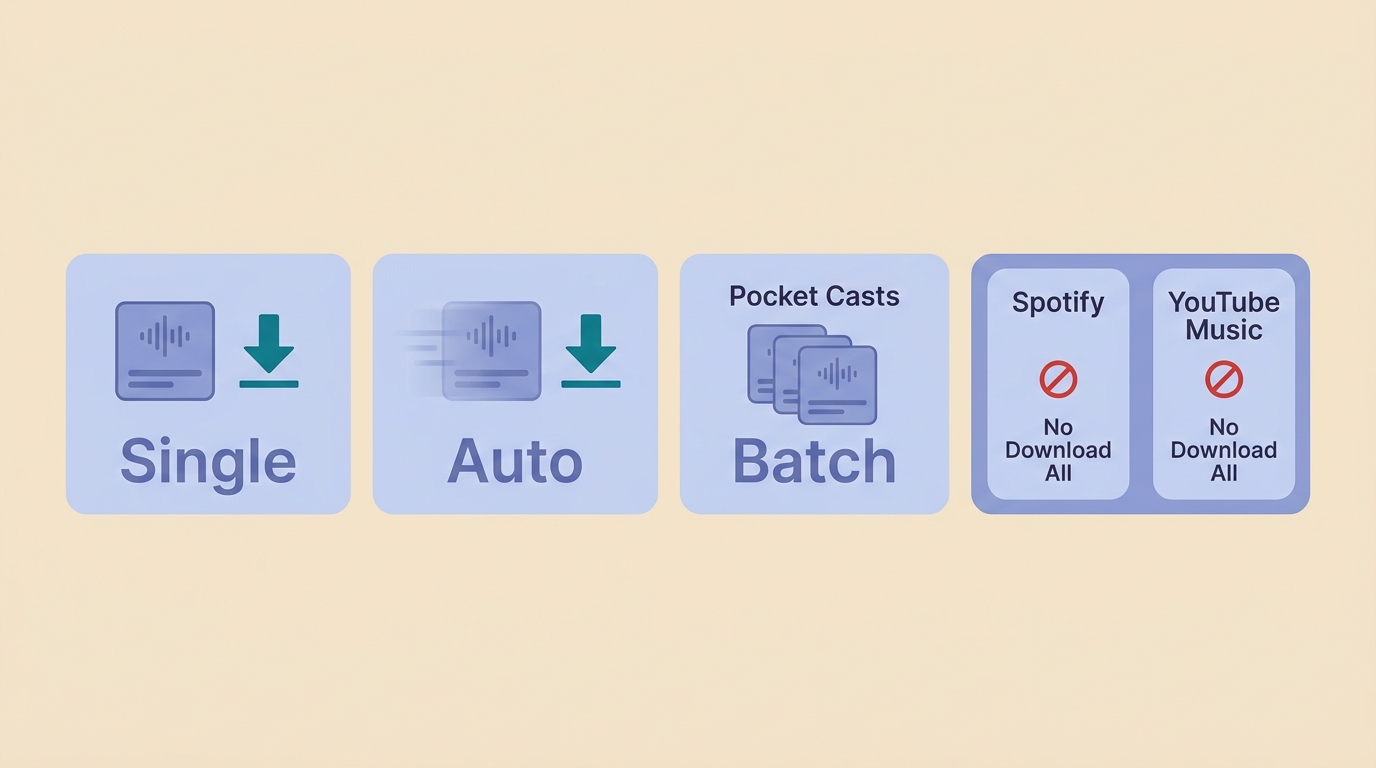
Podcast apps differ sharply in individual, automatic, bulk, and full-show controls. The distinction matters most for large back catalogs and long periods without a reliable connection.
Single Episodes and Auto-Downloads
Single-episode downloads give the most control over podcast download storage, while automatic podcast downloads reduce manual work for shows you follow regularly.
- Single episode: Best when you want a small, deliberate offline queue.
- Automatic download: Best for new releases from selected shows, provided storage and cleanup settings are configured.
- Bulk selection: Pocket Casts is a documented example of an app that can select multiple episodes for download management.
Automatic settings are useful only when paired with deletion rules. Otherwise, an offline queue can quietly consume more space than expected.
Full-Show and Batch Limits
Bulk podcast downloads are not the same as a true Download All button. Spotify can make a large back catalog tedious to prepare, while YouTube Music does not offer full-show downloads or Smart Downloads for podcasts.
- Estimate how many episodes you actually need for the offline period.
- Download a small test group and confirm that playback works without a connection.
- Check the app's retention rule, available storage, and automatic cleanup settings.
- Finish the remaining queue before travel and reconnect when the service requires it.
My advice for a long trip is to verify both completion and retention before leaving. A long queue is useless if part of it is still pending or the app expects a reconnect during the trip.
Storage, Transfer, and Offline Rules Compared
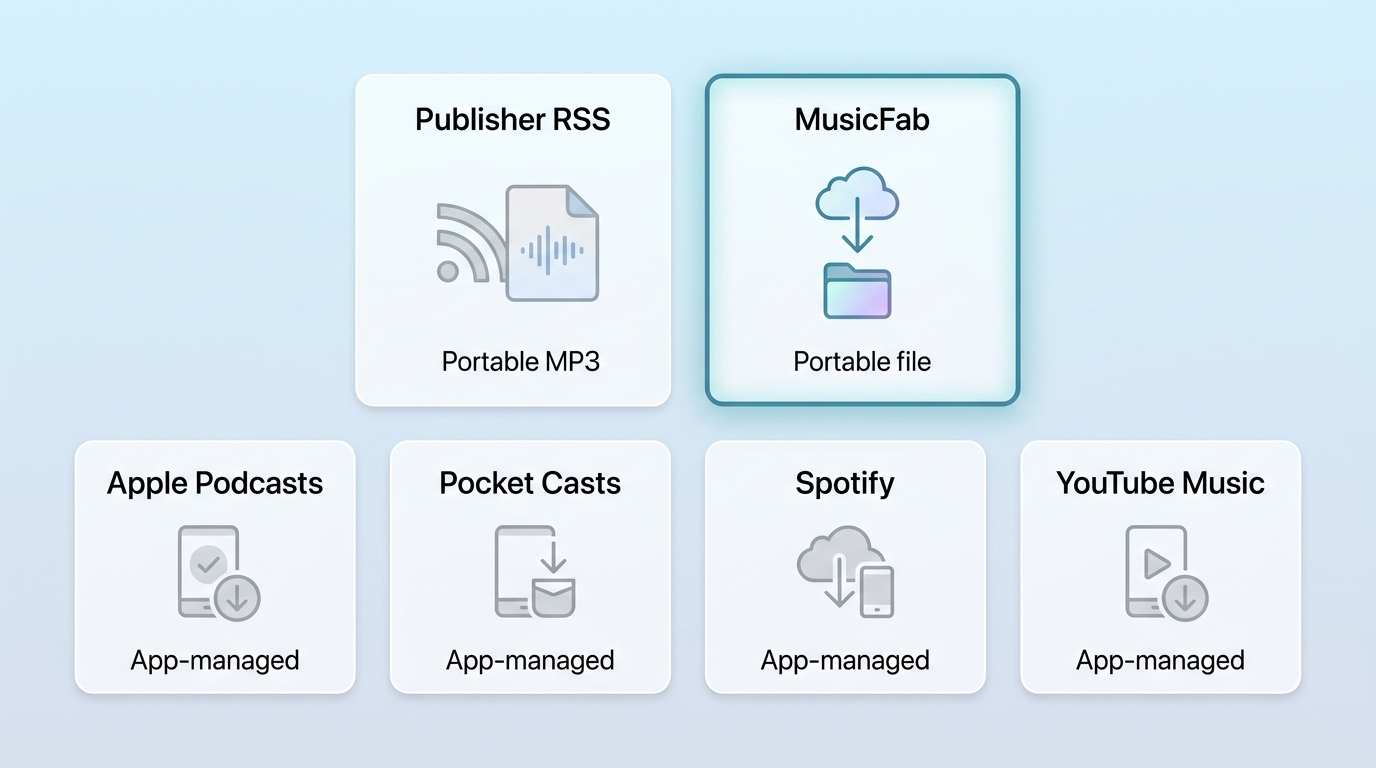
The key differences are where a download lives, whether it can move to another player, and how each service handles automation or continued offline access.
| Method | Download type | Supported devices | Podcast subscription requirement | Portable file access | Single, automatic, or batch options | Storage location | Reconnect or retention rule | Best fit |
|---|---|---|---|---|---|---|---|---|
| Publisher or RSS direct file | Direct audio file when offered | Devices with a browser, feed reader, and file storage | No platform subscription for public files; publisher access rules vary | Yes | Usually single episodes; feed-reader automation varies | User-selected folder | Source availability can change; use remains subject to authorization | Free portable file when the publisher exposes one |
| Apple Podcasts | App-managed offline copy | iPhone, iPad, and Mac | No separate app subscription for standard public shows; paid show access varies | No | Single episodes and automatic new-episode downloads | Inside the Podcasts app | Apple documents save, download, and deletion controls within the app | Listeners centered on Apple devices |
| Pocket Casts | App-managed offline copy | iPhone and Android | Public podcast feeds do not require a podcast subscription; app features can vary by plan | No normal file workflow | Single, automatic, and multi-episode controls | App storage, with Android storage controls | Managed by the app and feed settings | Android or iPhone users who want stronger queue and storage controls |
| Spotify | App-managed offline copy | iPhone, Android, Windows, and Mac | No Premium music subscription required for podcast episodes | No | Single episodes and automatic options where available | Inside Spotify | Reconnect at least once every 30 days | Listeners who keep music and podcasts in one app |
| YouTube Music | App-managed offline copy | iPhone and Android | Podcast downloads are available regardless of membership status | No | Single episodes; no full-show downloads or Smart Downloads for podcasts | Inside YouTube Music | Managed by the app and service availability | Listeners who follow podcasts in the YouTube ecosystem |
| MusicFab desktop workflow | Local audio file for supported services | Windows and Mac | Active access to the source service where required | Yes | Single and batch handling | User-selected computer folder | Availability depends on the environment and service terms | Authorized local-file workflows and portable playback |
Platform rules shown here are current as of August 2026.
The practical split is clear: app methods minimize setup, publisher or RSS files offer the cleanest free portable route when available, and a desktop workflow serves readers who need a local file from a supported service.
Conclusion: Download Podcasts as MP3 With MusicFab
For content you're authorized to access, where permitted by platform terms and applicable law. MusicFab All-In-One provides a Windows and Mac local-file workflow for supported services and requires valid access to the original platform where applicable.
MusicFab uses direct-source downloading and can convert at up to 20x, with actual speed depending on network conditions and hardware. It supports MP3 and formats such as M4A, WAV, FLAC, OPUS, and EAC3, with output quality determined by the source service and subscription.
Batch handling, ID3 tags, cover art, track numbers, and .lrc lyrics make the workflow useful for organizing multiple episodes. That is the practical advantage here, not a promise that every show or service will behave the same way.
Who This Desktop Workflow Fits
This workflow fits a narrower group than the full audience covered in our MusicFab review: people who need portable podcast files, a known folder, and batch handling on Windows or Mac.
- Good fit: You need MP3 compatibility, desktop organization, or authorized transfer to another compatible device.
- Less suitable: You are satisfied with app-only offline listening or need a mobile-only workflow.
My rule is to stay with the official app when its offline copy solves the problem. A desktop tool earns its place only when file access, format choice, or batch organization is genuinely necessary.
Steps for Saving Authorized Episodes
The workflow is short: install the desktop app, open a supported service, locate the episode, choose an output format, and save the file to a folder you control.
- Install the app. Download and install MusicFab on a Windows or Mac computer.
Choose the supported service. Open the relevant service module and sign in with valid access where required.
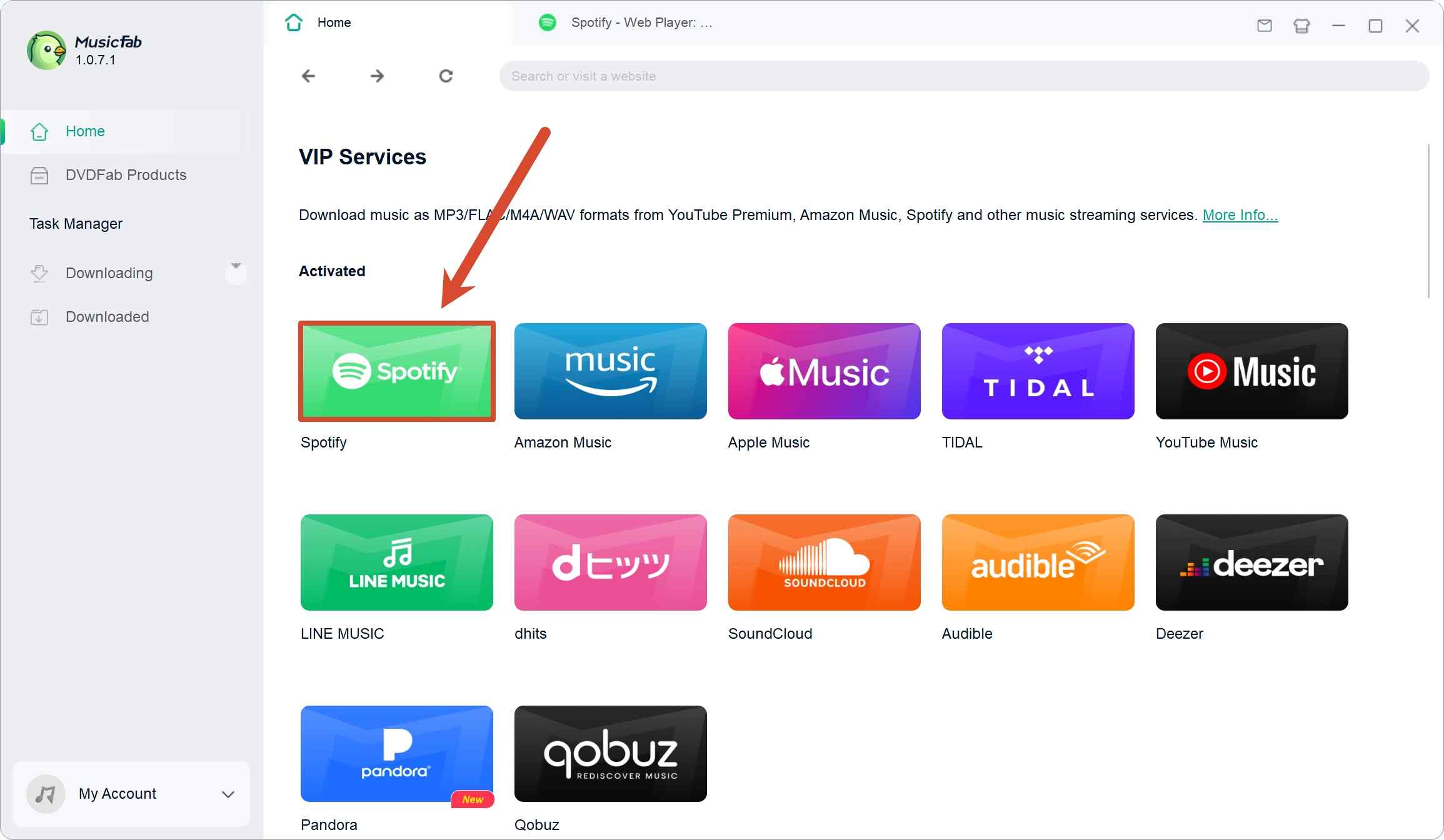
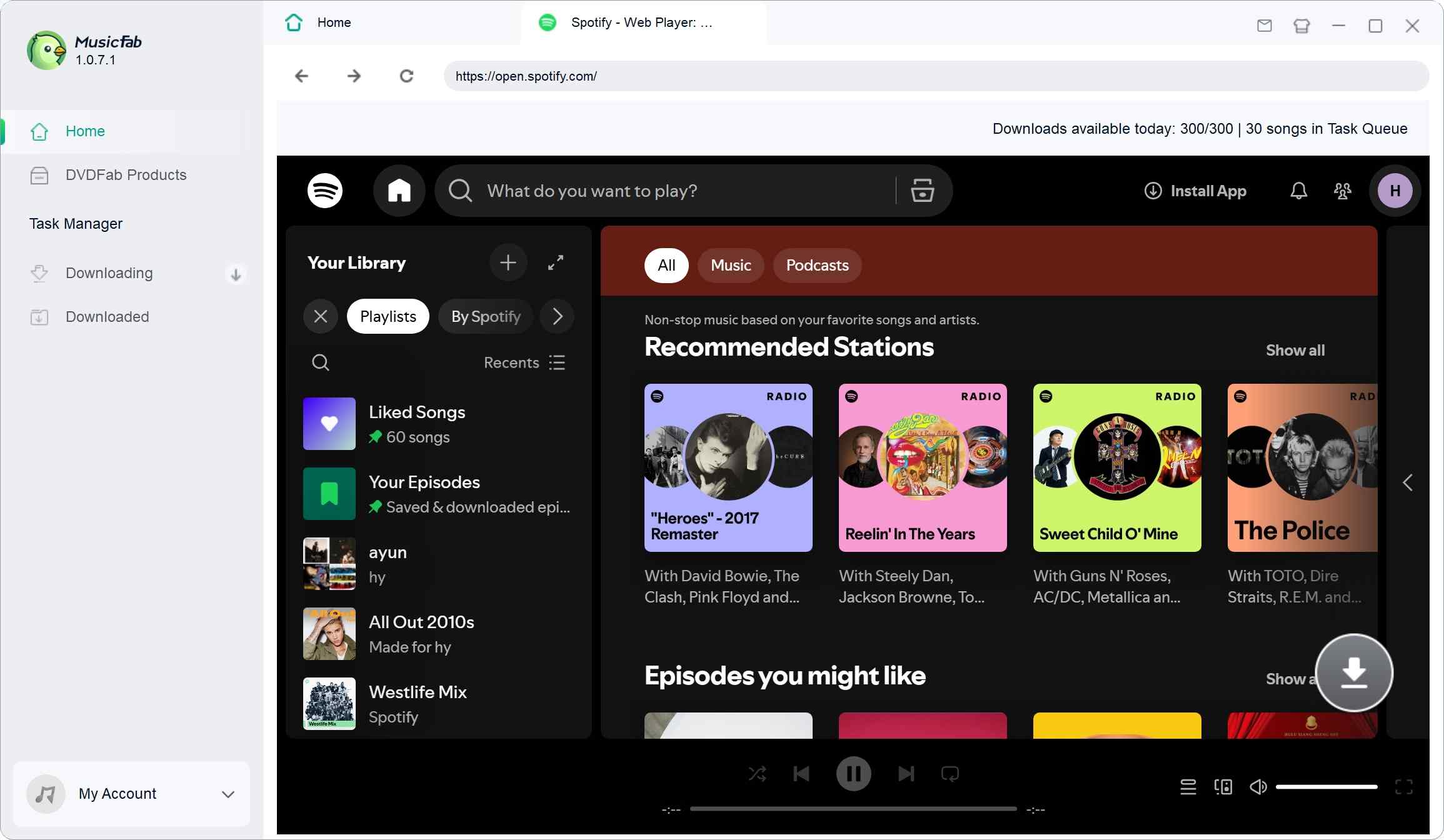
Locate the episode. Search inside the service or open the authorized episode URL.
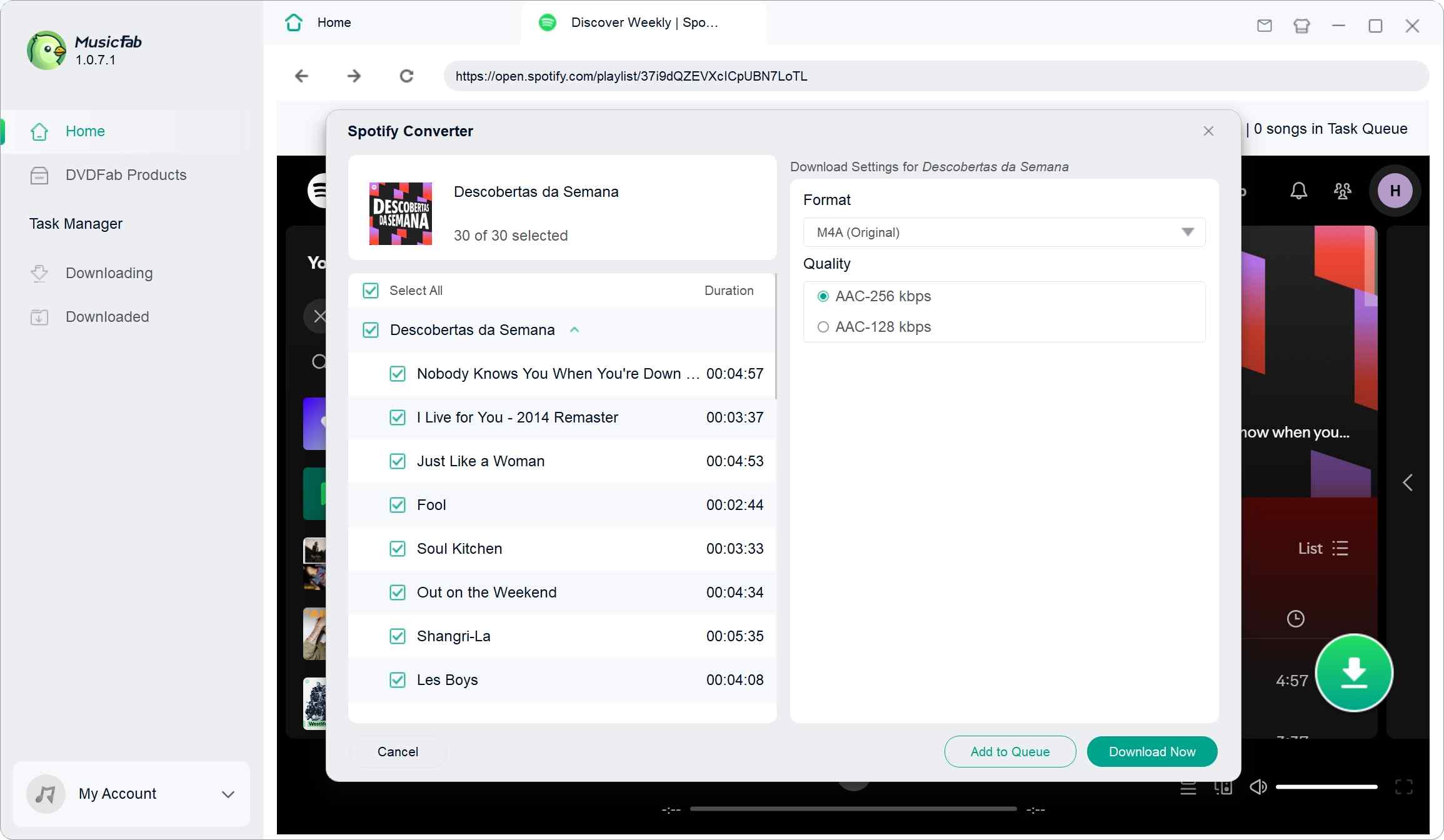
Select the format. Choose MP3 for broad device compatibility, or select FLAC or WAV when the source supports it and the added file size serves a real purpose.
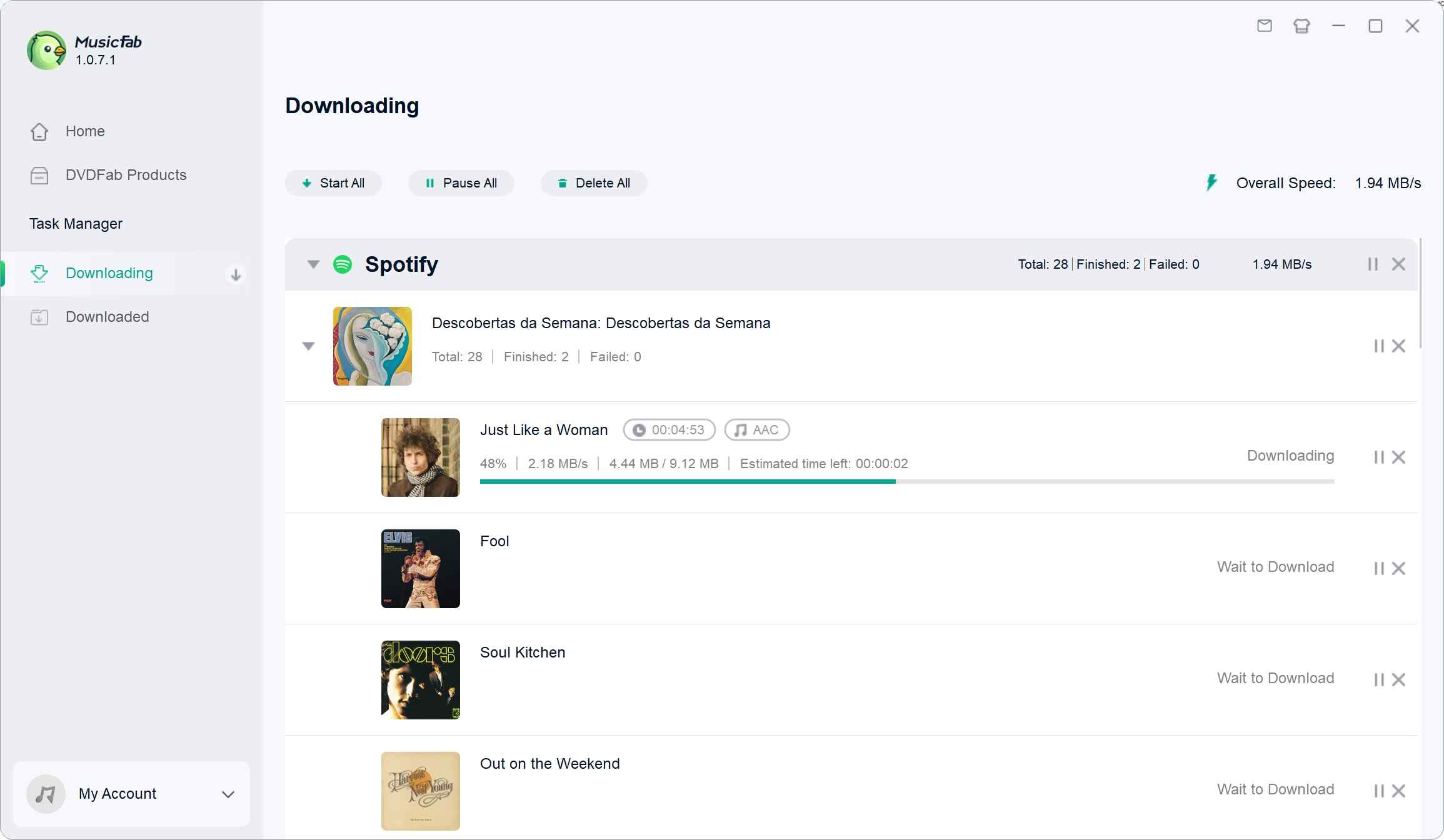
- Save and verify. Start the download, open the destination folder, and play a short portion in the target player before building a larger batch.
I choose MP3 when broad playback matters more than file size or archival fidelity. A lossless format makes sense only when the source provides the quality and the destination workflow benefits from it.
FAQs About Podcast Download
These answers cover the practical edge cases that are easy to miss after choosing a download method.
Do I need to download a podcast before listening?
No. You can stream while connected, but downloading is useful for flights, commutes, weak coverage, or reducing mobile data use.
Why won't a podcast episode download?
Check the connection, free storage, app permissions, app updates, account access, and whether the episode is still available. Retry with one episode before changing broader settings.
Can I delete a download without unfollowing the show?
Yes. In apps such as Apple Podcasts, deleting the downloaded copy is separate from unfollowing the show, so future episodes can still appear in your library.
What should I check before moving a podcast to another device?
Confirm that you have an accessible audio file rather than an app-managed copy, then check format compatibility, available storage, and authorization for personal use.

In this article, I will share my personal MusicFab review, analyzing its features, pros and cons, user feedback, recently update and roadmap.
By Jane Chen - Sep 22, 2026
Apple Music offers a higher lossless ceiling and Dolby Atmos, while Spotify combines 24-bit/44.1 kHz FLAC with Connect and discovery strengths. This guide compares specs, device paths, settings, a fair listening protocol, switching trade-offs, and an optional authorized local-file workflow.
By Jane Chen - Aug 26, 2026
Choose a K-pop download method by file ownership, rights status, source quality, and batch needs. This guide compares MusicFab, licensed purchases, owned CD rips, creator-authorized catalogs, desktop tools, and unverified archives, with practical MP3-versus-FLAC guidance and four legal-use FAQs.
By Jane Chen - Aug 13, 2026
Choosing a FLAC downloader in 2026? Compare paid stores, free archives, desktop converters, web tools, and CD ripping — plus how to verify true lossless files.
By Jane Chen - Aug 12, 2026