
Spotify vs Pandora in 2026: Prices, Discovery, and Best Fit

Table of Contents
Spotify vs Pandora: Key Takeaways
Here's the short answer: Discovering music has never been the hard part; the real question is whether you want to actively manage what plays or hand the reins to an algorithm. After years bouncing between both apps as a working music editor, that's the split I keep coming back to when readers ask me which one to pick.
Spotify is built for on-demand control: search a song, build a playlist, jump between music and podcasts, and (on supported devices) turn on Lossless. Pandora is built for radio-style discovery powered by the Music Genome Project, which quietly trains a station the longer you listen. Prices are close in the US, so your real free Spotify vs. free Pandora and paid-tier decision comes down to control vs. stations.
This guide walks through discovery, catalog and content, apps and devices, current US prices, free plans, audio quality, data use, and who each service actually fits.
- Listening style: Spotify = on-demand + playlists; Pandora = stations + radio flow.
- Discovery: Both are strong, but they work differently (playlist-led vs station-led).
- Availability: Pandora is US-only due to licensing restrictions. But Plus/Premium subscribers can typically keep listening to downloaded offline music while traveling abroad.
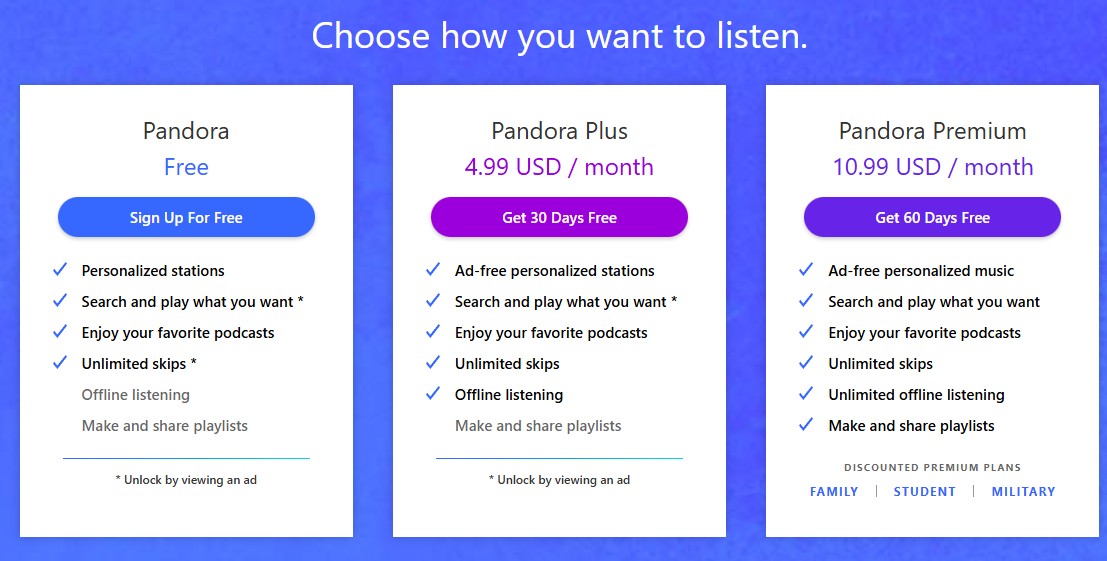
- Price (US early 2026): Spotify Individual is $12.99/mo, while Pandora Premium is $10.99/mo and Pandora Plus is $4.99/mo. Pandora can be cheaper if you only want ad-free radio (Plus); individual “full” plans are close.
- Audio ceiling: Spotify offers higher maximum quality options than Pandora.
- Data use: depends on quality settings; Spotify’s top tiers can use much more.
Prices as of August 2026, per each service's official US plan pages.
My verdict: Spotify suits active, multi-format listeners who live in playlists and want the higher audio ceiling. Pandora suits lean-back listeners who want a single trained station to do the work at a lower ad-free entry price.
| Category | Spotify | Pandora |
|---|---|---|
| Best for | On-demand listening, playlists, podcasts, social features | Radio-style discovery, “set it and forget it” stations |
| Discovery model | Playlist- and algorithm-led (Discover Weekly, Daily Mixes) | Station-led via the Music Genome Project, trained by thumbs |
| Free-tier control | Search-and-play on many tracks, with ads and skip limits | Stations only, with ads and daily skip limits |
| Individual price (US) | Premium Individual $12.99/mo | Plus $4.99/mo (radio, ad-free); Premium $10.99/mo (on-demand) |
| Family & household | Premium Family $21.99/mo; up to 6 accounts at the same address | Premium Family $17.99/mo; up to 6 accounts at the same address |
| Content beyond music | Podcasts and audiobook listening time included with Premium plans | Podcasts included; no audiobooks |
| Device ecosystem | Mobile, desktop, web, cars, most smart speakers and TVs | Mobile, desktop, web, cars, most smart speakers (US) |
| Offline listening | Premium: on-demand offline for songs, albums, playlists, podcasts | Plus: station-only offline; Premium: on-demand offline |
| Audio-quality ceiling | Lossless up to 24-bit/44.1 kHz FLAC on Premium (supported devices) | “High” 192 kbps MP3 on Premium |
| Where it works | Available in many countries | United States only |
On-Demand vs. Radio
- Spotify is built for on-demand control: you decide what plays next.
- Pandora is built for radio-style discovery: the station decides, and you steer it.
Playlist Discovery vs. Trained Stations
If you know what you want to hear, Spotify feels faster.
Spotify’s core experience is simple: search → pick → play. That’s why it feels “instant” when you already know what you want. Discovery shows up mainly through personalized playlists (like Discover Weekly) and algorithmic mixes that surface new tracks inside a playlist-led experience.
If you want discovery without effort, Pandora stays oddly hard to beat.
Pandora starts with stations, not playlists. You seed a station with an artist, song, or genre, then shape it over time using feedback. Under the hood, Pandora leans on the Music Genome Project, which is designed to match songs by musical attributes—so it often feels like it “understands” the sound you’re chasing, not just the artist name.
Pandora also leans into modes (like “Discovery” or “Deep Cuts”) so the same station can behave differently without you rebuilding anything.
Where Each Discovery Model Frustrates Listeners
Neither approach is a clean win. In my own listening, Spotify's algorithmic mixes can start looping through the same 30-song comfort zone after a few weeks, especially if you skip a lot or lean on one daily mix. The catalog is huge; the exposure feels narrow. Pandora runs into a different wall: a trained station is easy to lean back into, but retraining it toward a new mood takes real effort in thumbs and skips, and the free tier's daily skip cap makes that retraining slower than it should be.
Fit-wise, if you're the kind of listener who builds playlists for driving, working, and cooking, Spotify's active model pays off. If you'd rather hit play on one station and let it evolve for a year, Pandora still earns that patience in a way playlist algorithms don't quite replicate.
Music Catalog and Content Variety
Music Breadth Without Inflated Counts
Both services carry the major-label catalogs most US listeners care about, so the day-to-day breadth feels similar for mainstream searches. The practical gap shows up at the edges: Spotify tends to have more depth in international releases, indie labels, and niche electronic subgenres, while Pandora's strength is how its station engine surfaces adjacent artists you wouldn't have typed into a search bar.
I avoid quoting a “total tracks” number here because neither company publishes a stable, comparable figure, and the ones that circulate online are outdated. If your listening lives in a specific niche, the honest test is to search for five artists you actually care about in each free app before you subscribe.
Podcasts, Audiobooks, and Social Features
Spotify has invested heavily beyond music: a large podcast library, audiobook listening hours bundled into premium plans, collaborative playlists, Blend, and Jam sessions for shared listening. Pandora carries podcasts too, but it doesn't do audiobooks, and its social layer is minimal by design; the app stays radio-first.
Spotify's broader ecosystem is a real advantage if you want one app for music, podcasts, and audiobooks or if sharing playlists with friends is part of how you listen. Pandora's narrower focus is a feature, not a gap, for listeners who just want music to play and don't want another content library to manage.
Apps, Devices, and Everyday Usability
Mobile, Desktop, Car, and Speaker Support
Both services cover the obvious bases: iOS and Android apps, desktop apps for Windows and Mac, a web player, CarPlay and Android Auto, and the major smart-speaker platforms. Spotify Connect makes it especially easy to hand off playback between a phone, laptop, and a Sonos or similar speaker without stopping the song, which is why multi-room listeners tend to gravitate toward it. Pandora casts to Chromecast, Alexa, and most connected speakers as well, but its group-control experience is simpler and more single-device by nature.
Ease of Use and Reliability
Spotify's mobile app has grown feature-heavy in the last two years: video podcasts, audiobooks, and social tabs share space with the music library, and some listeners find the home screen busier than it used to be. Pandora's app stays visibly simpler, which is genuinely nice if you want to open, tap a station, and pocket the phone.
My honest take: Spotify suits a multi-device household that hands playback around; Pandora suits a simpler station-first routine on one or two devices. Spotify's limitation is interface density on mobile. Pandora's limitation is that once you leave its ecosystem or the US, it stops feeling like a full streaming service.
Spotify vs Pandora Cost
Current U.S. Prices
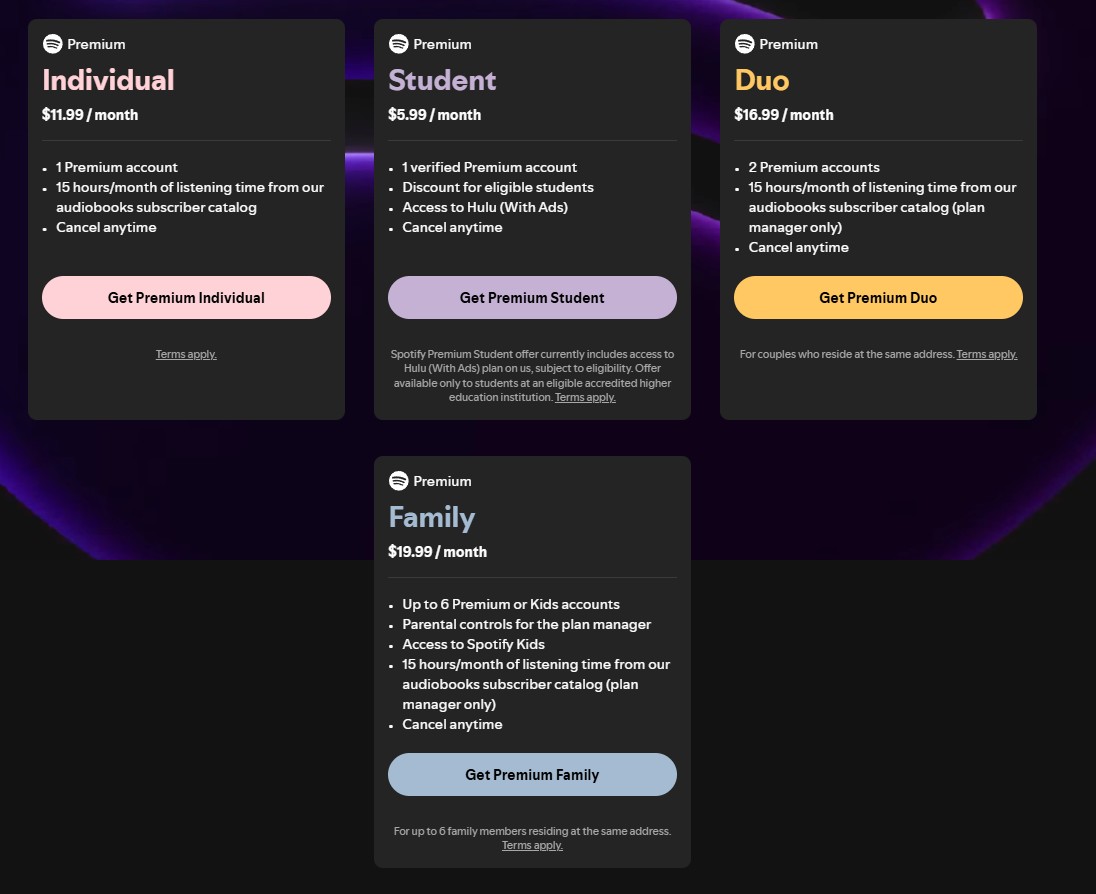
Spotify's and Pandora's full individual plans sit within about two dollars of each other. Pandora can be much cheaper if you only want ad-free radio (Plus), while Spotify tends to bundle more extras (like audiobook listening time) into Premium.
Current plan pricing (US, as of August 2026)
| Plan | Spotify | Pandora |
|---|---|---|
| Free | $0 (ad-supported) | $0 (ad-supported) |
| Lowest paid tier | — | Plus: $4.99/mo (website) |
| Main individual tier | Premium Individual: $12.99/mo | Premium: $10.99/mo (website) |
| Student | $6.99/mo (Premium Student) | $5.99/mo (Student Premium) |
| Couples | Duo: $18.99/mo | — |
| Family | $21.99/mo | $17.99/mo (Premium Family) |
Tips:
Pandora explicitly notes that Apple in-app pricing is higher (e.g., Plus $5.99 / Premium $12.99 via Apple), and Premium Family isn't available through Apple purchases. So if you're price-sensitive, buying through Spotify's or Pandora's website is usually the easiest instant save.
Household Eligibility and Account Rules
Both services scope their family plans to a single residential address, with up to six individual accounts under one plan manager. Each household member gets their own login, library, and recommendations rather than sharing a single account. Pandora's Duo-style couples plan isn't available, so two-person households usually land on either Spotify Duo or one of the family tiers if they want separate profiles. Simultaneous streaming behavior isn't uniformly published for either service; treat the family plan as separate accounts first, not as a shared-login shortcut.
Free Spotify vs Free Pandora
Free-Tier Control, Ads, and Skip Limits
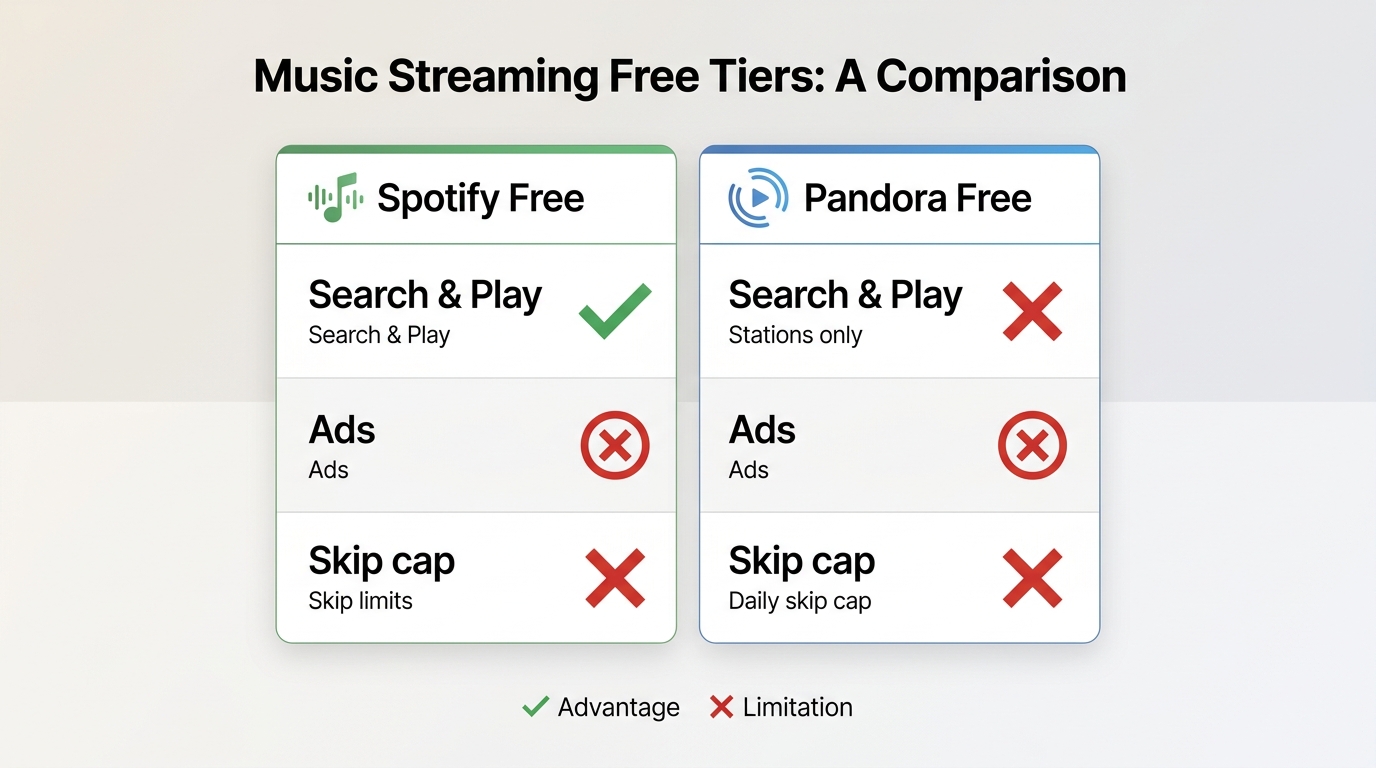
If you don't want to pay yet, the practical choice is simple: Spotify Free suits occasional on-demand listeners who want to search specific tracks, while Pandora Free suits radio-first listeners who'd rather thumb a station into shape than build playlists.
- Spotify Free now lets you search and play specific songs, but it's still limited to protect Premium perks: audio ads, a daily on-demand cap, and skip limits kick in during heavier use.
- Pandora Free stays radio-first: it's built for stations, thumbs, and passive discovery, with a daily skip cap on ad-supported radio (and sometimes an option to unlock more by engaging with an ad).
Quick comparison: What you can do for free
| Feature | Spotify Free | Pandora Free |
|---|---|---|
| Core experience | On-demand is improving (more “pick what you want”) | Stations/radio-first listening |
| Ads | Yes | Yes |
| Song control | “Pick & Play / Search & Play / Share & Play” rolling out globally | Limited direct song selection (station behavior) |
| Skips | Skip and on-demand caps kick in after heavier use | Ad-supported radio has a daily skip cap; sometimes an ad-engagement option unlocks more |
| Offline listening | Paid feature (Premium) | Paid feature (Plus/Premium) |
Pandora Plus vs Pandora Premium vs Spotify Premium
Best Fit by Paid Tier
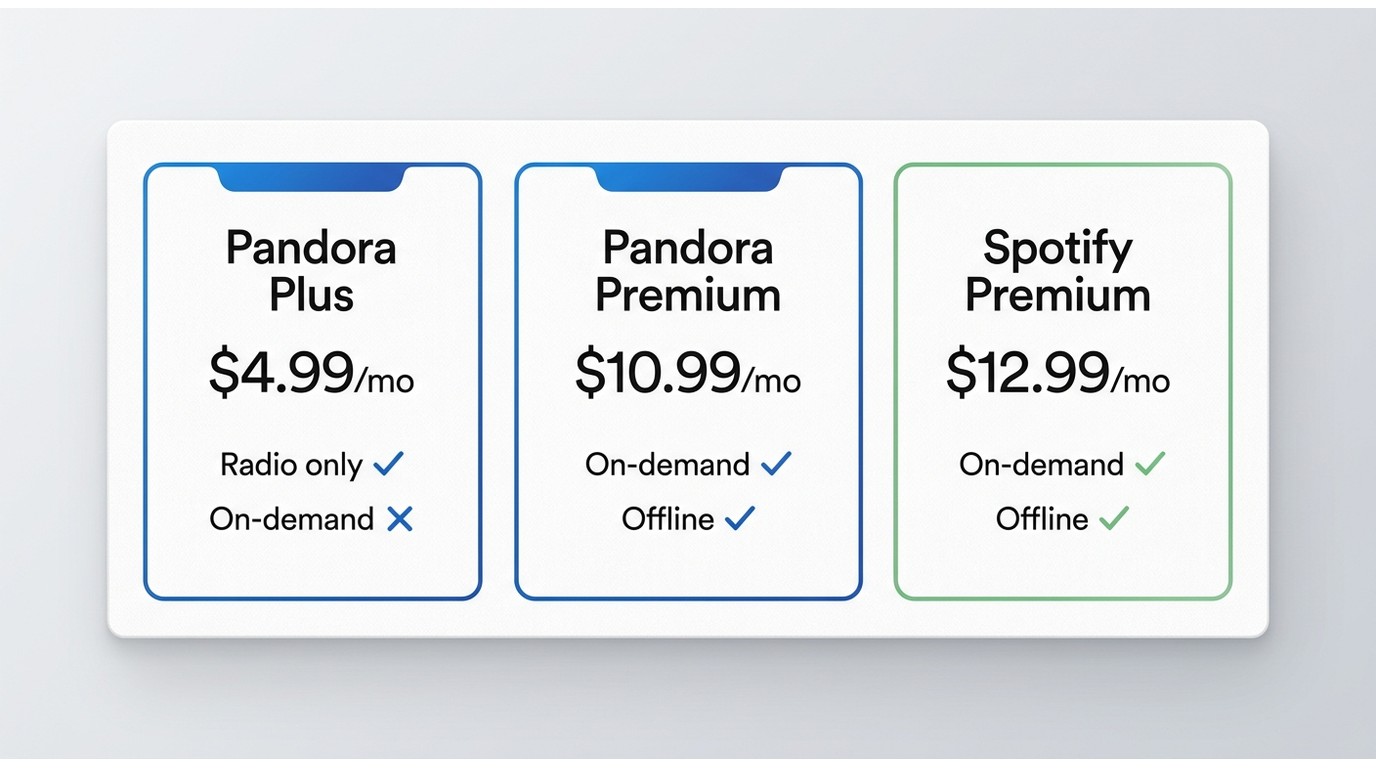
How to choose the paid plan between Spotify and Pandora:
- Pandora Plus ($4.99/mo): If you mostly want radio-style stations without ads and don't care about full on-demand control, Plus is the budget winner. Not ideal if you regularly want to pull up a specific album or share playlists.
- Pandora Premium ($10.99/mo, website): Adds more Spotify-like features (on-demand search, playlists, broader offline). Best for listeners who want Pandora's station engine plus occasional on-demand playback. Not ideal if you'd rather live inside curated playlists.
- Spotify Premium Individual ($12.99/mo): Best if you actively build playlists, hop between devices, and want the higher audio ceiling. Not ideal for a lean-back listener who'd get the same value from ad-free radio.
For two-person households, the Spotify Duo plan at $18.99/mo covers two accounts at one address; Pandora doesn't offer a comparable couples tier. See also Pandora Plus vs. Pandora Premium.
Offline Listening and Travel Limits
Offline behavior is one of the clearer paid-plan differences. Spotify Premium lets you download songs, albums, playlists, and podcasts for on-demand offline playback on mobile and desktop. Pandora Plus limits offline to your stations (an offline mode that plays your most-listened content when you lose signal), not arbitrary on-demand tracks. Pandora Premium expands offline to individual songs, albums, and playlists you've added.
Travel matters if you're a Pandora subscriber: the service is licensed for the United States, and while Plus and Premium users can typically keep playing content already downloaded to their device abroad, live streaming outside the US isn't the intended experience. Spotify travels more cleanly across borders.
Audio Quality Compared
If sound quality is your top priority, Spotify wins on paper. Its Spotify audio quality settings go up to Very High (≈320 kbps) and now support Lossless up to 24-bit/44.1 kHz FLAC on compatible devices. Pandora tops out at high (192 kbps MP3). Codec numbers don't guarantee an audible difference on every device, though—on phone speakers or basic earbuds, most listeners won't hear the gap between 192 kbps and 320 kbps.
| Official quality settings | ||||||||||||||||||||||||||||||||||||||||||||||||||||||||||||||||||||||||||||||||||||||||||||||||||
|---|---|---|---|---|---|---|---|---|---|---|---|---|---|---|---|---|---|---|---|---|---|---|---|---|---|---|---|---|---|---|---|---|---|---|---|---|---|---|---|---|---|---|---|---|---|---|---|---|---|---|---|---|---|---|---|---|---|---|---|---|---|---|---|---|---|---|---|---|---|---|---|---|---|---|---|---|---|---|---|---|---|---|---|---|---|---|---|---|---|---|---|---|---|---|---|---|---|---|
| Service | Free tier (typical max) | Paid tier (typical max) | Top option | |||||||||||||||||||||||||||||||||||||||||||||||||||||||||||||||||||||||||||||||||||||||||||||||
| Spotify | Web: AAC 128 kbps | Very High ≈320 kbps | Lossless up to 24-bit/44.1kHz FLAC (Premium, compatible devices) | |||||||||||||||||||||||||||||||||||||||||||||||||||||||||||||||||||||||||||||||||||||||||||||||
| Pandora | Standard 64 kbps (AAC+) | High 192 kbps (MP3) (Premium) | 192 kbps is the listed “High” ceiling | |||||||||||||||||||||||||||||||||||||||||||||||||||||||||||||||||||||||||||||||||||||||||||||||
Note: Spotify Lossless isn't available for music videos, podcasts, or audiobooks.
Data Usage Compared
Spotify can use more data because it offers higher bitrate options (especially Very High ≈ 320 kbps and Lossless). Pandora’s top listed setting is 192 kbps, and its default “Standard” is 64 kbps, which is naturally lighter.
These are rough estimates based on the published bitrates (real-world use varies a bit with overhead). A simple rule is MB/hour ≈ 0.45 × kbps
| Quality level | Spotify bitrate | Spotify data/hr | Pandora bitrate | Pandora data/hr |
|---|---|---|---|---|
| Low | 24 kbps | ~11 MB/hr | 32 kbps | ~14 MB/hr |
| Normal / Standard | 96 kbps | ~43 MB/hr | 64 kbps | ~29 MB/hr |
| High | 160 kbps | ~72 MB/hr | — | — |
| Very High / High | 320 kbps | ~144 MB/hr | 192 kbps | ~86 MB/hr |
| Lossless | varies by track/format | much higher | — | — |
For content you're authorized to access, where permitted by platform terms and applicable copyright law, keeping local files also cuts recurring data use. For listeners managing libraries across services, MusicFab is a desktop workflow for saving music as local files across services—useful when official in-app downloads don't cover your cross-service library and less useful when they already do.
Spotify vs. Pandora: Pros, Cons, and Best Fit
Spotify Pros:
- More on-demand control: you can search for a specific song/album and build playlist-first listening.
- Broader feature set: a broader set of listening features (and highlights audiobooks/podcasts on its plan page).
- Higher audio ceiling: up to “very high" quality and lossless on supported devices.
- Stronger social/collab feel: Spotify positions more sharing/collaboration features as part of the experience.
- Wider availability: Spotify is available across many countries (vs. Pandora’s US-only availability).
Spotify Cons:
- Free tier is still ad-supported and limited compared with Premium.
- Discovery can feel playlist-led: great if you like curated mixes, less ideal if you want a pure “radio station” experience.
Pandora Pros:
- Radio-style discovery is the core: Pandora emphasizes station-based personalization through the Music Genome Project.
- Modes add variety without rebuilding stations (e.g., Discovery/Deep Cuts).
- Cheaper ad-free entry point: Pandora Plus can be a low-cost way to get ad-free radio.
Pandora Cons:
- Lower max audio quality: Pandora’s “High” setting tops out at 192 kbps.
- US-only availability
- Less on-demand-first by design: even with Premium, Pandora still feels stations-first compared to Spotify.
If you want control, breadth, and higher audio options, Spotify usually wins. If you want radio-first discovery with minimal effort, Pandora remains a strong pick if you're in the US. If audiobooks matter, compare included listening time on your plan before paying.
Conclusion: Is Pandora Still Worth It in 2026?
Pandora is very much active in the United States in 2026, with Plus and Premium plans running and stations still being trained by longtime users. It's a smaller service than Spotify by every measure that gets reported publicly, and it hasn't tried to match Spotify feature-for-feature on podcasts, audiobooks, or social listening.
For most new listeners today, no, Spotify's on-demand control and higher audio ceiling will do more for you at a similar price. But for one specific type of listener, Pandora still earns its keep: someone who's spent years training a station or two, plays them across a workday or road trip, and genuinely doesn't want to build playlists. If that's you, switching for the sake of switching would cost you the trained-station equity you already own.
FAQs
Q1. Can I recreate my Pandora stations on Spotify?
You can get close, not identical. Spotify's artist radio, song radio, and personalized mixes (Discover Weekly, Daily Mixes) approximate the feel of a Pandora station, but the years of thumbs and skips that shaped a specific Pandora station don't transfer over. Expect a few weeks of retraining before Spotify's algorithm settles into something that feels like yours.
Q2. Why does Spotify keep recommending the same songs?
Recommendation loops are a real complaint, though not everyone hits them. Spotify's algorithm weighs your recent listening heavily, so a few weeks of leaning on one daily mix or skipping unfamiliar tracks can quietly narrow the pool. Pandora's station-tuning model is more explicit—you thumbs-up or -down individual songs—which some listeners find easier to steer when things go stale.
Q3. Can family members stream at the same time?
Both Spotify Premium Family and Pandora Premium Family are built around up to six separate accounts at one residential address, each with its own login and library — not one shared login. The plan manager verifies the household address. Simultaneous streaming rules follow each service's official plan terms, so treat the plan as six independent accounts rather than as a shared login you all sign into.
Q4. Which service works better with smart speakers?
There's no universal winner — it depends on your speaker ecosystem. Spotify Connect is the smoother experience if you hand off playback around multiple speakers or run a Sonos-style multiroom setup. Pandora casts fine to Alexa, Chromecast, and most connected speakers, but group control and rediscovery flows can feel less polished. If you own a lot of speakers from one brand, check that brand's supported services before you decide.
Q5. Which paid plans include offline listening?
Spotify Premium includes on-demand offline downloads for songs, albums, playlists, and podcasts. Pandora Plus supports offline playback for your stations (your most-listened content is cached for when the signal drops), not arbitrary on-demand tracks. Pandora Premium adds on-demand offline listening for songs, albums, and playlists you've added.

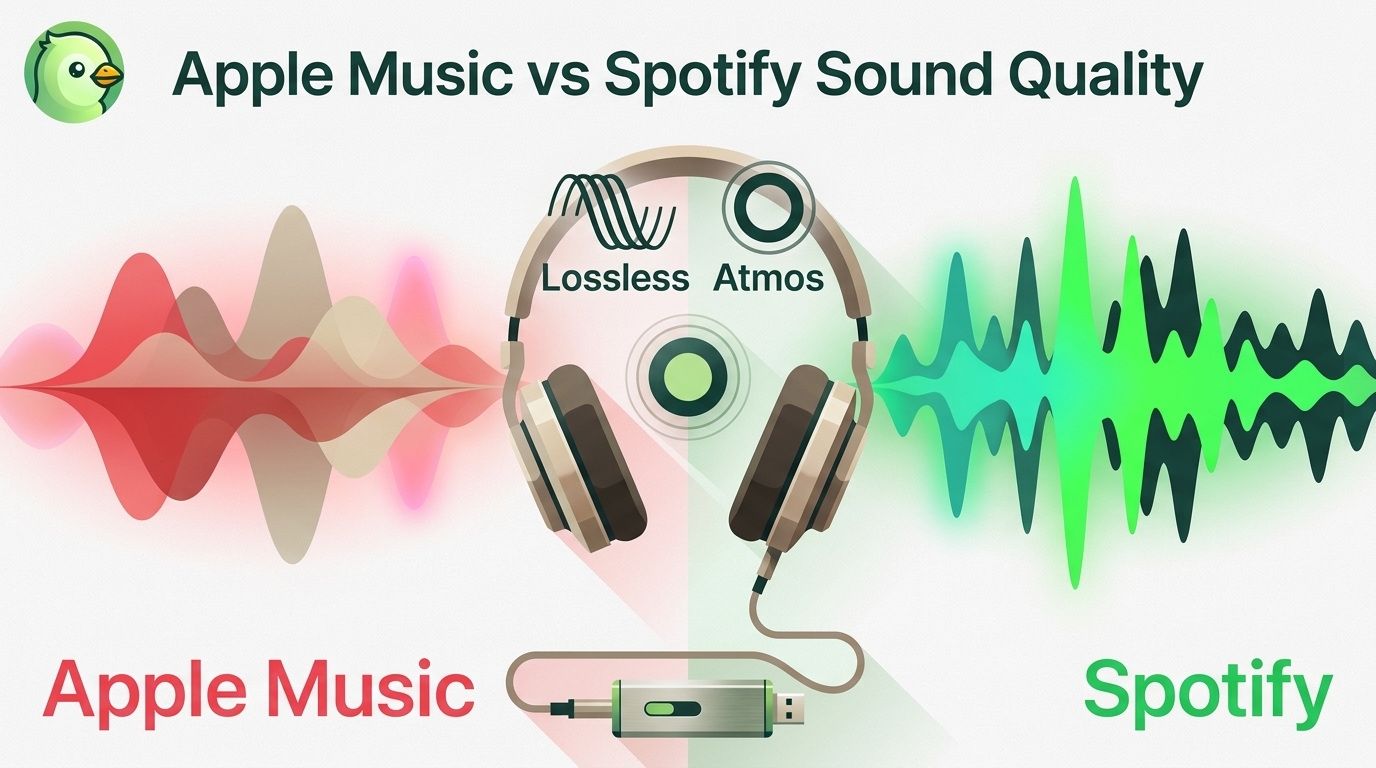
Apple Music offers a higher lossless ceiling and Dolby Atmos, while Spotify combines 24-bit/44.1 kHz FLAC with Connect and discovery strengths. This guide compares specs, device paths, settings, a fair listening protocol, switching trade-offs, and an optional authorized local-file workflow.
By Jane Chen - Aug 26, 2026
Choose a K-pop download method by file ownership, rights status, source quality, and batch needs. This guide compares MusicFab, licensed purchases, owned CD rips, creator-authorized catalogs, desktop tools, and unverified archives, with practical MP3-versus-FLAC guidance and four legal-use FAQs.
By Jane Chen - Aug 13, 2026
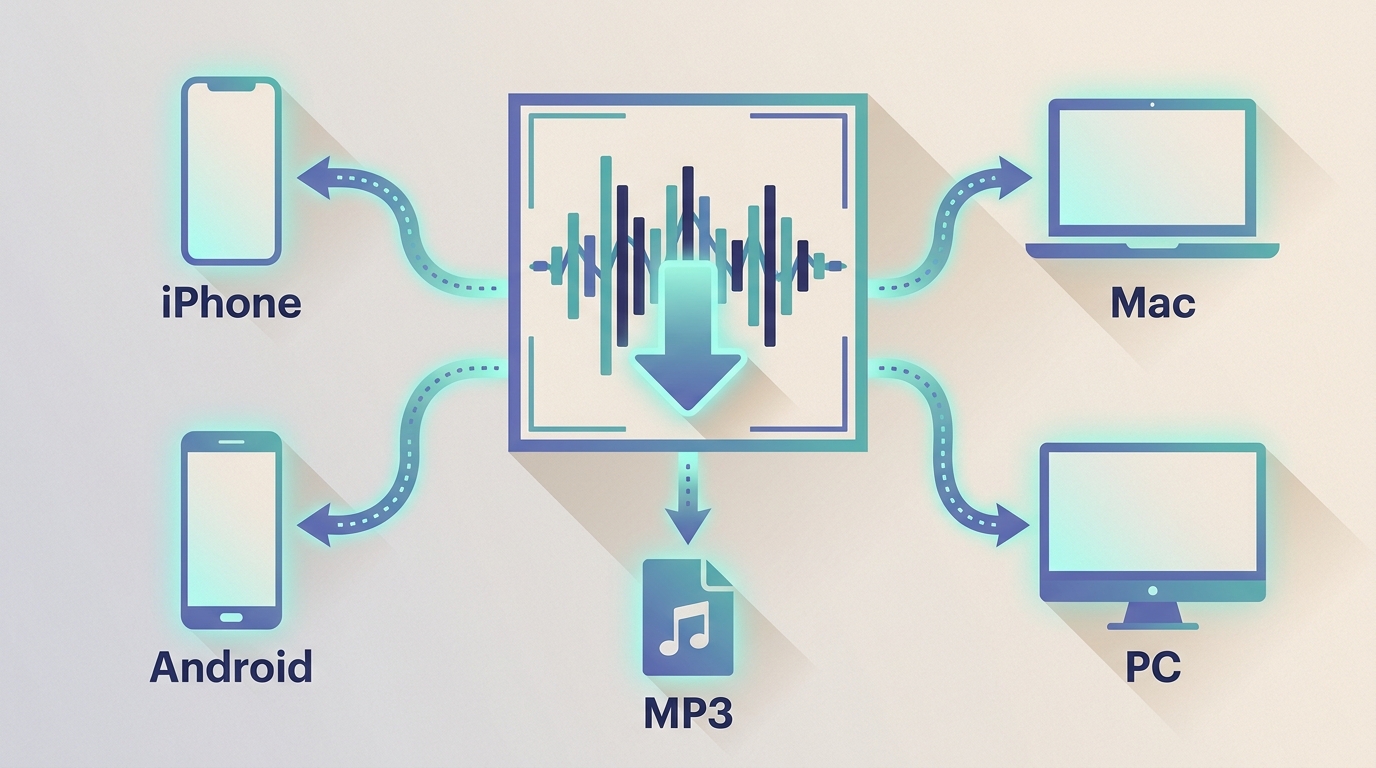
Podcast downloads fall into two categories: app-managed offline copies and portable audio files. This guide covers free publisher and RSS links, current iPhone and Android app workflows, bulk and retention limits, a platform comparison, and an authorized MusicFab desktop workflow for saving local files.
By Jane Chen - Aug 13, 2026
Choosing a FLAC downloader in 2026? Compare paid stores, free archives, desktop converters, web tools, and CD ripping — plus how to verify true lossless files.
By Jane Chen - Aug 12, 2026