
TuneFab Spotify Music Converter Review 2026: Worth the Price?

Summary: This review examines TuneFab Spotify Music Converter through its features, historical hands-on evidence, purchase terms, troubleshooting, safety questions, and user-report patterns. It also explains when TuneFab may fit, when caution is warranted, and when MusicFab is a more suitable desktop alternative.
Table of Contents
Searching for a TuneFab Spotify Music Converter review usually means you want to know whether the app earns its price before you trust it with a Spotify account or a large playlist. My takeaway is cautious: the workflow is straightforward, but current batch evidence and purchase terms matter.
This TuneFab review separates advertised features from the archived test, then checks TuneFab pricing, safety questions, user-report themes, and whether a TuneFab alternative makes more sense for a particular workflow.
Features of TuneFab Spotify Music Converter
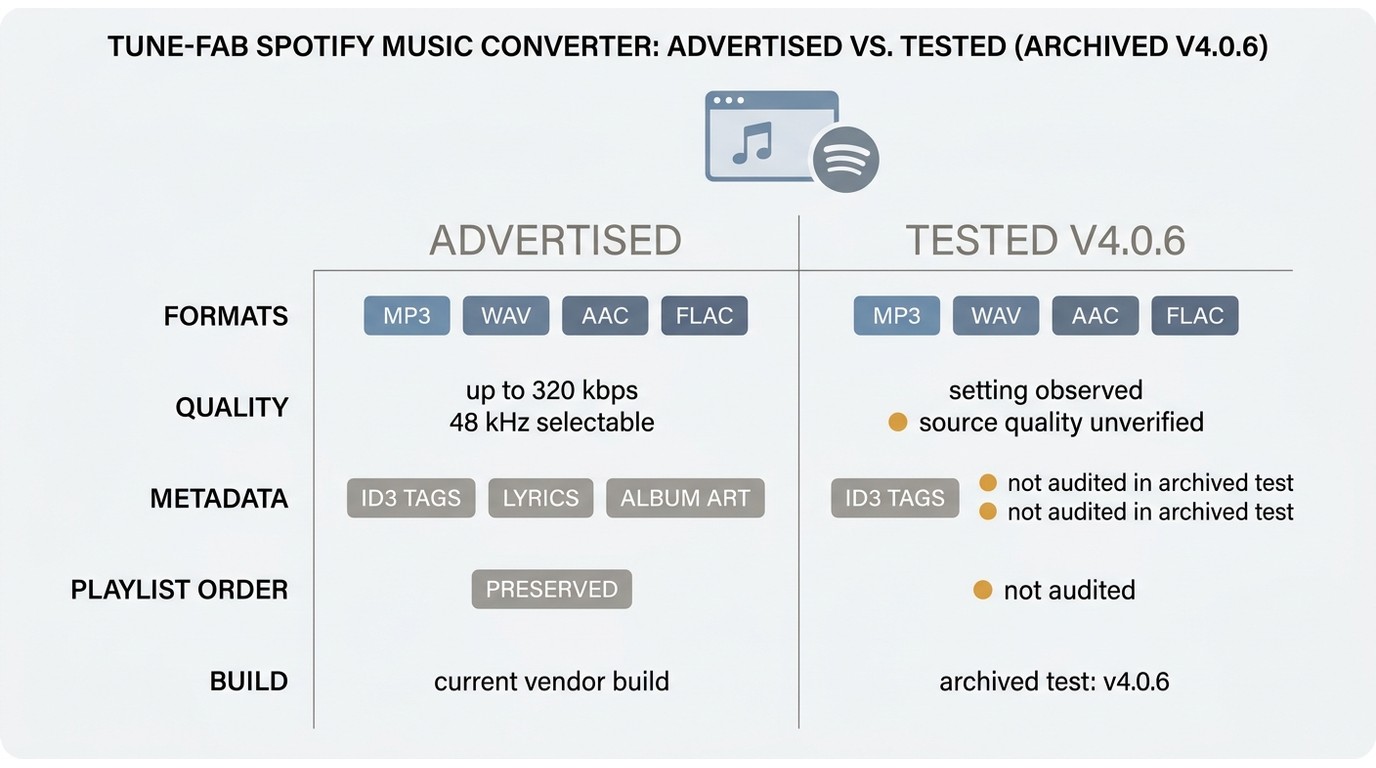
TuneFab Spotify Music Converter covers the expected desktop basics, but TuneFab output quality should be judged by the resulting files, not by a selected setting alone. The strongest evidence in the original test concerns one track, metadata visibility, and a completed conversion.
Formats, Bitrate, Tags, and Lyrics
The app lists common audio choices including MP3, WAV, AAC, and FLAC, along with bitrate and sample-rate settings. It can retain track information such as title, artist, album, and related ID3 fields, although the archived test did not document a complete lyrics, album-art, or playlist-order audit.
| Item | Advertised or selectable | Evidence available in this review |
|---|---|---|
| Build | Vendor materials identify v4.0.10 in June 2026 | The archived hands-on session used v4.0.6 |
| Formats | MP3, WAV, AAC, FLAC, and additional app-listed options | A full current-build format export was not reproduced |
| Quality settings | Up to 320 kbps and 48 kHz are presented as choices | Selecting 320 kbps does not prove source-quality 320 kbps audio |
| Metadata | ID3 information is supported | The historical output displayed track metadata after conversion |
| Library details | Tags, lyrics, album art, and playlist order are purchase-relevant | No current album or large-playlist verification is available here |
My judgment is simple: tags and correct track matching matter more in everyday library use than a large bitrate number displayed in a menu.
Claims Versus Verified Results
TuneFab conversion speed claims should not be treated as a benchmark for every computer or playlist. During the documented v4.0.6 session on a Windows 64-bit laptop with an AMD Ryzen 7 5800U and 16GB RAM, one 2:56 track completed in about five to six seconds.
That is a useful historical observation, not a current-build guarantee. The session did not include an album-scale timing run, a large playlist, or an independent check that a chosen bitrate matched the quality of the incoming Spotify stream.
TuneFab: Pricing, Trial, and Refund Terms
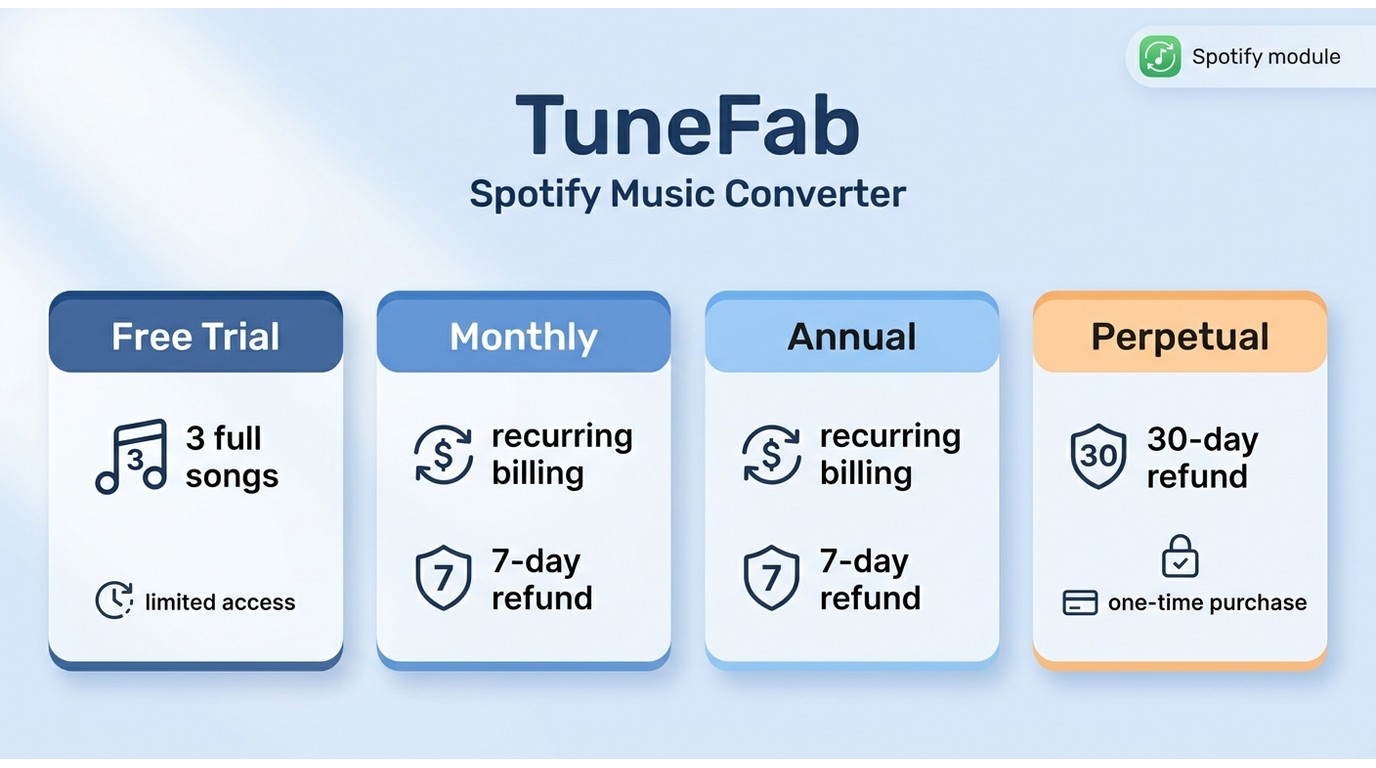
TuneFab pricing is structured around monthly, annual, and perpetual license options. As of July 2026, the central buying questions are renewal, cancellation access, and the refund deadline, not a promotional price that may vary by region or campaign.
Plans and Trial Limits
Is TuneFab free? No. The TuneFab free trial covers three full songs, while the TuneFab full version requires a paid license. Monthly and annual plans suit shorter commitments; the perpetual option suits readers who expect longer desktop use.
- Monthly plan: subscription access with recurring billing until canceled.
- Annual plan: a longer subscription term with the same need to manage renewal.
- Perpetual license: a one-time license for the covered product version and stated license scope.
- Trial: three complete song conversions, which is enough to inspect workflow and output but not large-playlist reliability.
I would use the trial to check login behavior, tag accuracy, and one realistic playlist sample before deciding. A fast single track says little about a library-sized job.
Cancellation and Refund Deadlines
Subscription plans have a published seven-day refund window, while perpetual licenses have a 30-day window. Cancellation is handled through the account or payment portal connected to the order, so saving the order email and confirming renewal status are practical steps.
Refund eligibility depends on the published policy and the reason for the request. This is where TuneFab's terms deserve as much attention as the converter interface, especially for readers who have seen billing or support complaints.
How to Use TuneFab Spotify Converter
The TuneFab Spotify converter uses a six-step desktop workflow: choose Spotify, sign in, add music, start conversion, monitor the queue, and inspect the result. The screenshots come from the archived v4.0.6 session, so labels may differ in a newer build.
Desktop Conversion Workflow
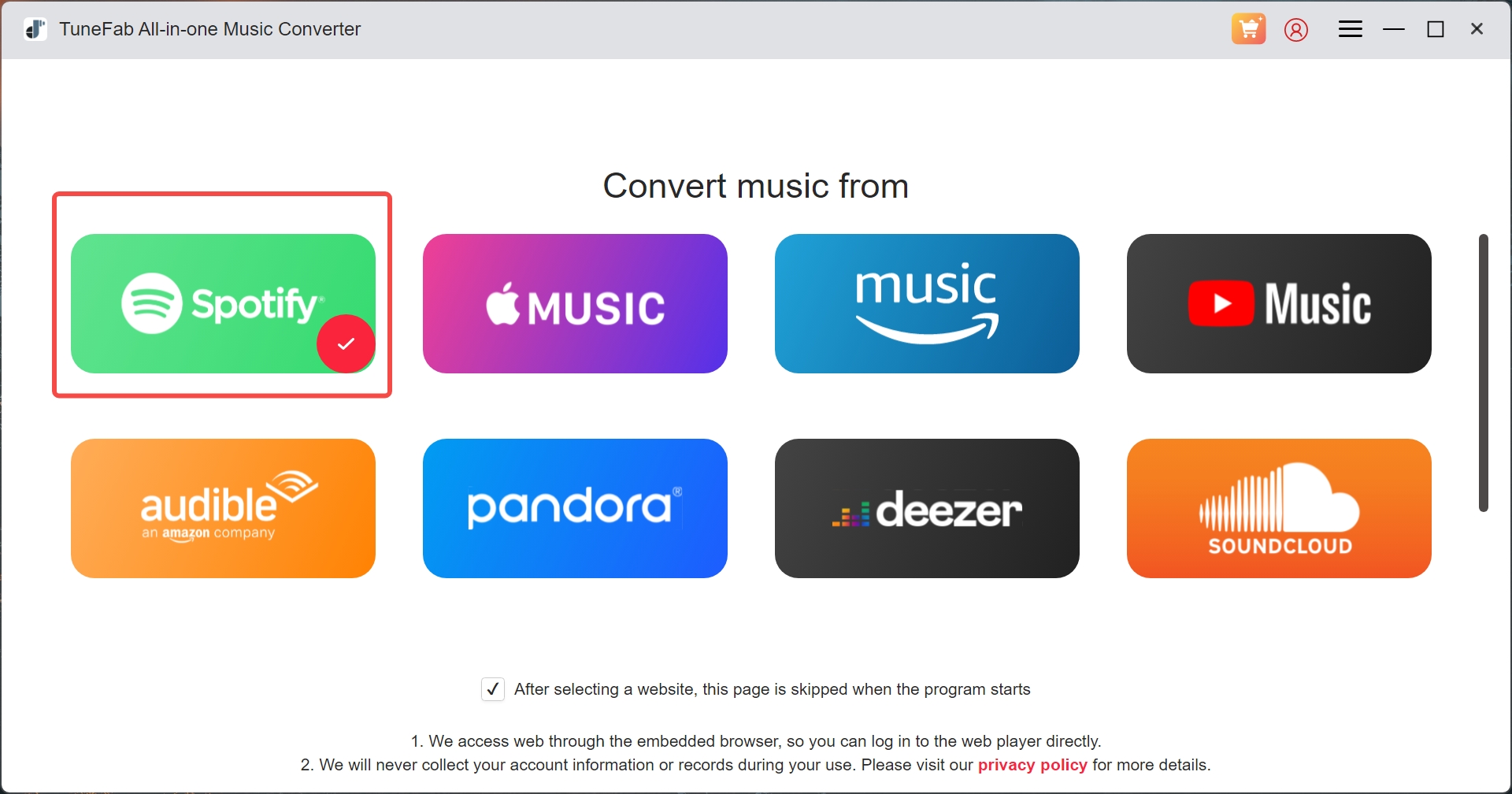
Step 1: Open TuneFab and select Spotify from the service menu.
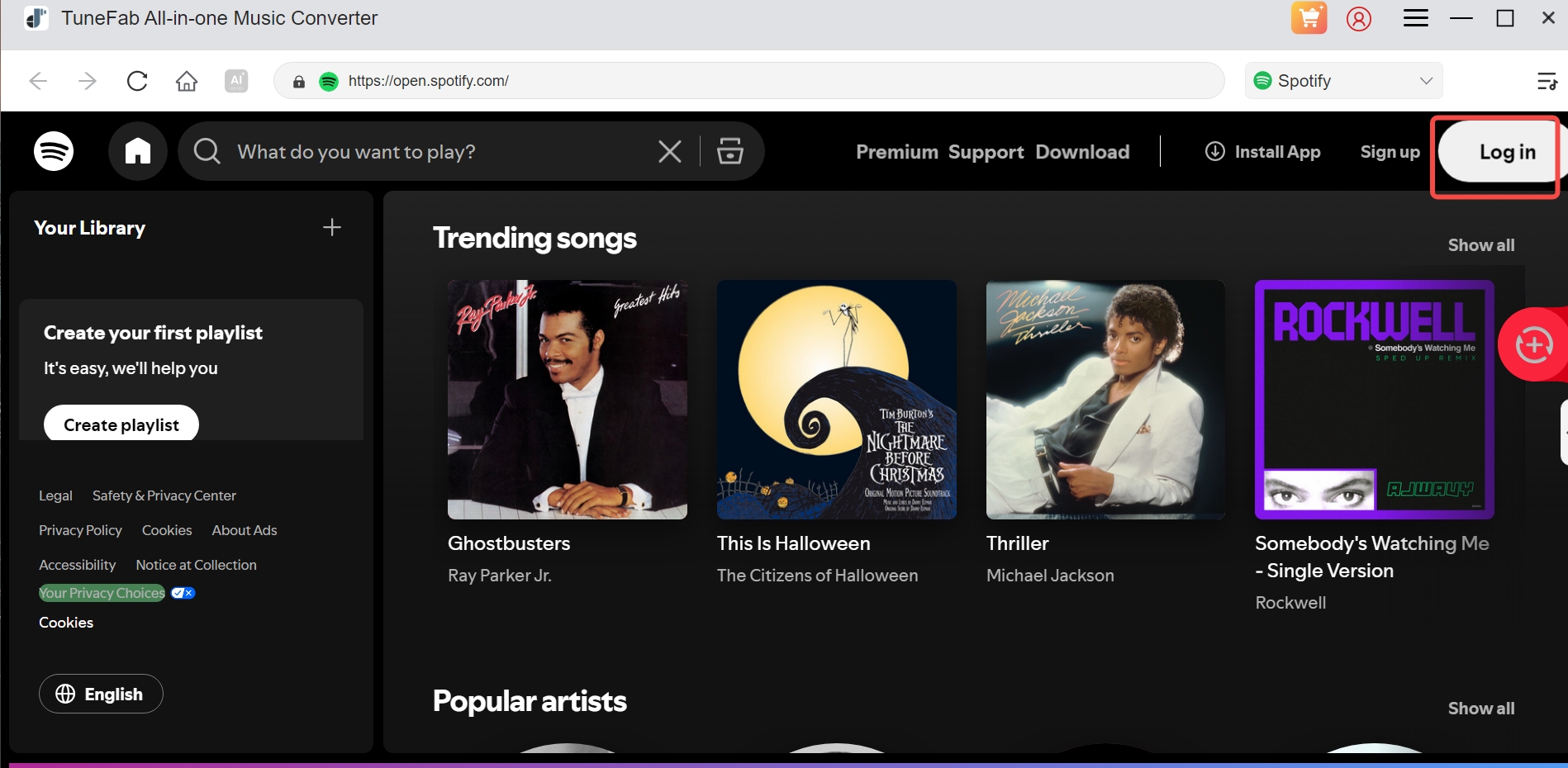
Step 2: Sign in to Spotify inside the app, then open a song, album, or playlist.
Step 3: Use the red add button to place the selected tracks in the queue.
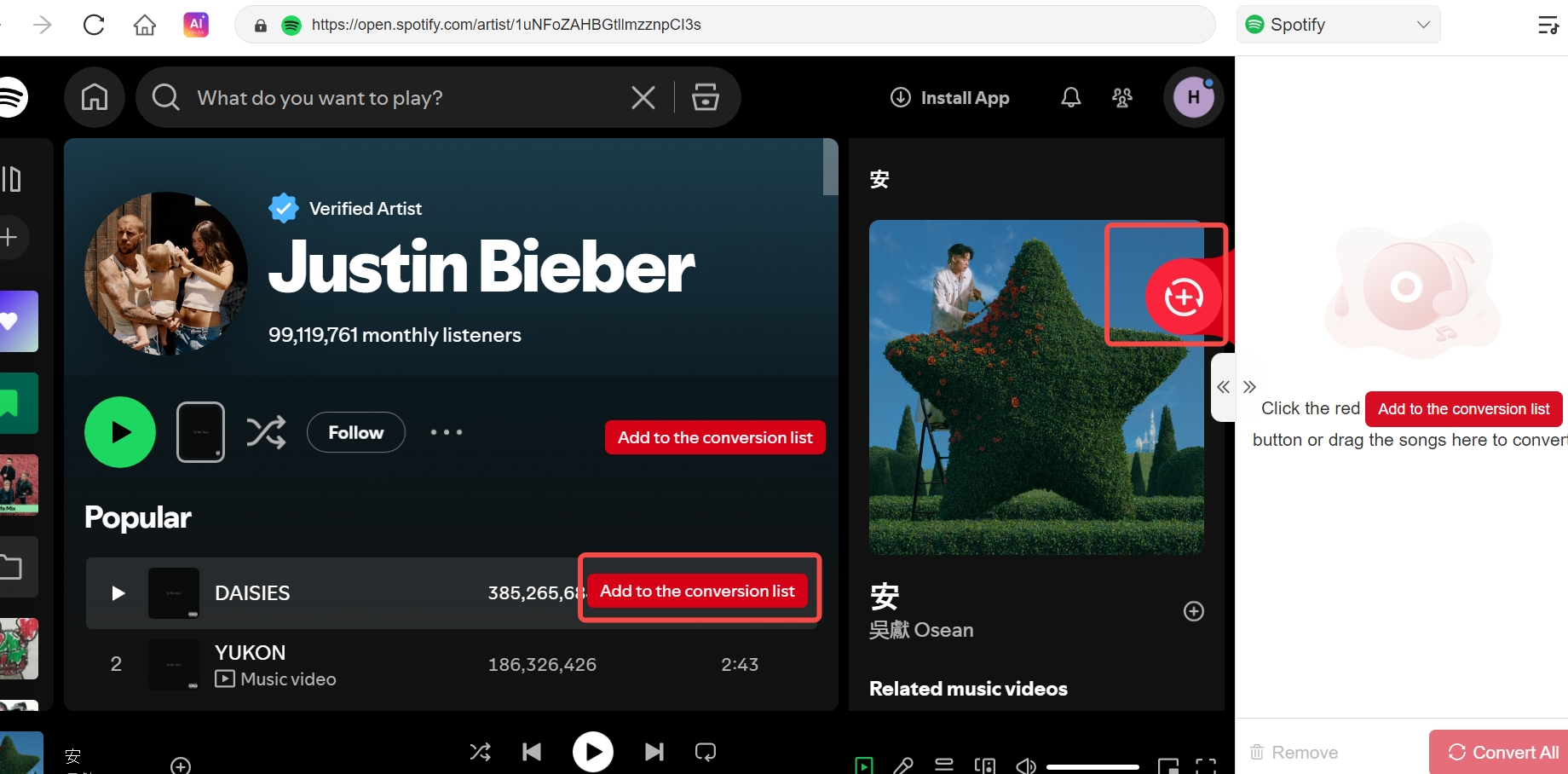
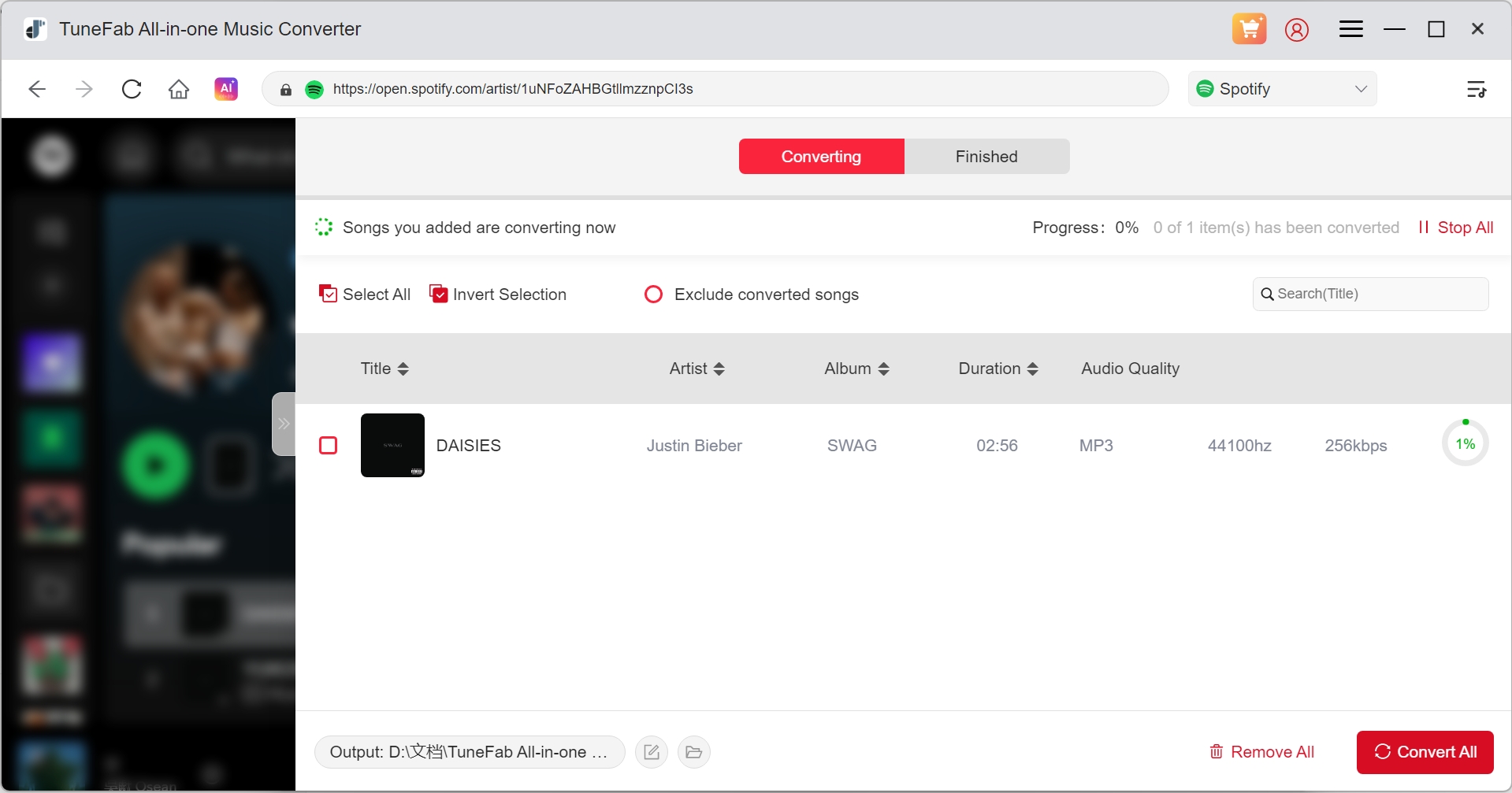
Step 4: Review the queued tracks and choose Convert All. Then, watch the sidebar for active and completed items.
Step 5: Open the finished item and inspect its metadata and file details.
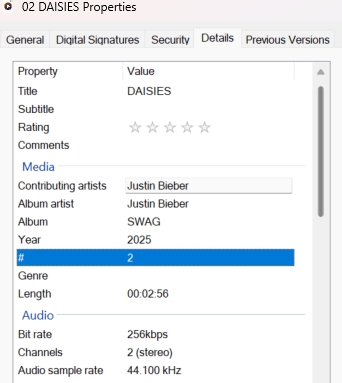
On the documented Windows v4.0.6 setup, the service selection, embedded login, queue, completion view, and metadata panel all appeared in one uninterrupted session. The least clear step was understanding which output controls were available under the trial, so I would inspect settings before building the queue.
TuneFab Troubleshooting and Large-Playlist Reliability
Most TuneFab failures should be handled by checking the app build, login session, output folder, available storage, and queue size before switching tools. Large-playlist reliability remains the bigger unanswered question because the archived test covered one track rather than a substantial library.
Common Failures and Current Fixes
- The app cannot load Spotify: update TuneFab, restart it, and sign in again through the embedded service page.
- A track fails to enter the queue: reopen the album or playlist, add a smaller selection, and retry the affected item.
- Progress stalls: confirm free storage, output-folder permissions, and a stable connection, then resume with a shorter queue.
- Metadata looks incomplete: compare the finished file with the Spotify listing and retry before processing the rest of the library.
- The interface changes after an update: recreate the queue rather than relying on an older saved session.
In the archived Windows session with TuneFab v4.0.6, the single-track queue reached completion and exposed the metadata view. That result supports retrying an isolated failure, but it does not establish stability for hundreds of tracks.
What Batch Tests Actually Show
No reproducible large-playlist test is available in the supplied evidence. User reports mention queues stalling near completion, track failures, and support delays, but those reports vary by build, account, computer, and playlist.
My cutoff is practical: retry a small failed batch after updating and reauthenticating, but do not commit a large library until a representative playlist finishes with correct matches, tags, cover art, and order.
Hands-On Test Results and Limitations
The hands-on evidence is useful but dated. It documents TuneFab v4.0.6 on a Windows 64-bit laptop with an AMD Ryzen 7 5800U, Radeon Graphics, and 16GB RAM, using the free trial and one 2:56 track.
Test Setup and Sample Sizes
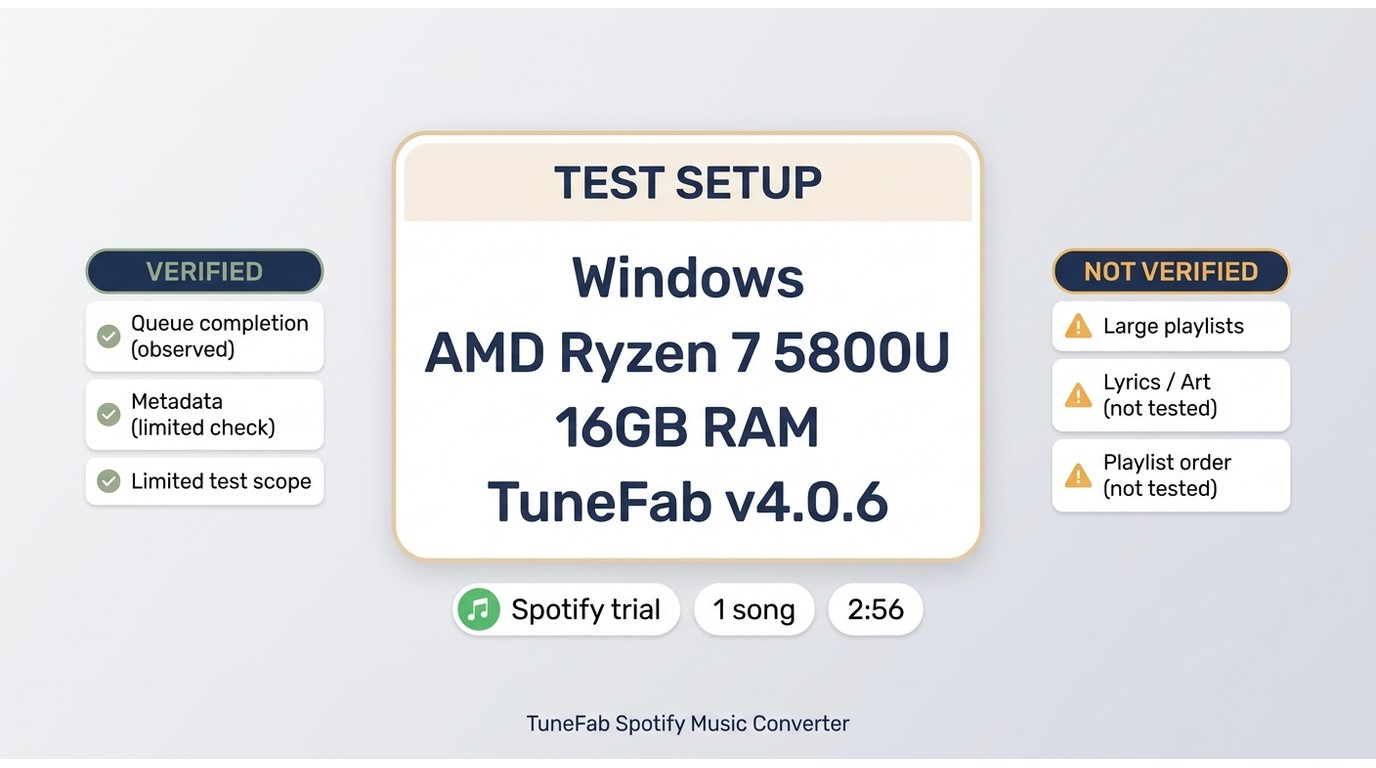
- App build: TuneFab v4.0.6, retained as a historical test rather than presented as the current build.
- Computer: Windows 64-bit laptop, AMD Ryzen 7 5800U with Radeon Graphics, 16GB RAM.
- Account and license scope: Spotify access through TuneFab's free trial.
- Sample: one 2:56 song; no documented album or large-playlist sample.
- Observed checks: queue completion, elapsed time, and visible metadata.
- Unverified checks: current-build failures, lyrics, album art, playlist order, and large-batch matching.
On that Windows 64-bit system running TuneFab v4.0.6, the archived sample finished in about five to six seconds and opened a metadata panel afterward. The narrow sample keeps the result reproducible, but it cannot support a broad speed or stability promise.
Speed, Stability, and Usability Verdict
The historical TuneFab conversion speed was acceptable for one short track, while usability was mixed. The basic path was easy to follow, but the interface looked dated and the trial did not provide enough evidence for a confident large-library verdict.

It's safe but speed was just okay: steady rather than quick. What I don't like was the interface: The archived v4.0.6 workflow was easy to understand but visually dated, with no clearly organized downloads hub. My verdict is not that TuneFab is unusable; it is that a smooth single-track run should not be mistaken for proof of large-playlist reliability.
The practical limitation is evidence depth. A buyer focused on occasional tracks may accept the simple workflow, while someone managing long playlists should test matching accuracy, order, and recovery from failed items before paying.
TuneFab: Safety, Legality, and User Reports
Questions such as Is TuneFab safe and Is TuneFab legal need separate answers. Installer behavior, privacy, Spotify account enforcement, copyright, billing, and support are different issues, and a complaint in one category does not prove a cause in another.
Installer, Privacy, and Account Evidence
No installer incident was documented in the archived session. Account concerns are less clear: some users describe warnings or disabled access after using converter software, but Spotify's disabled-account guidance discusses general fraudulent or Terms-violating activity and does not identify TuneFab by name.
That means a TuneFab-specific cause is unproven. Use a valid Spotify account, avoid unusual high-volume behavior, protect login credentials, and treat any account warning as a reason to stop and review Spotify's terms.
Copyright and Spotify Terms Boundaries
The question “Is TuneFab legal?” cannot be answered with an unconditional yes or no across all locations and uses. Copyright rules and Spotify's terms can differ, and access to the original service should remain valid.
Keep the scope personal: convert content you are authorized to access, do not share or sell resulting files, and do not present a desktop converter as part of Spotify's official offline mode. I would treat platform terms as a purchase constraint, not fine print to read after a problem.
Trustpilot and Reddit Themes
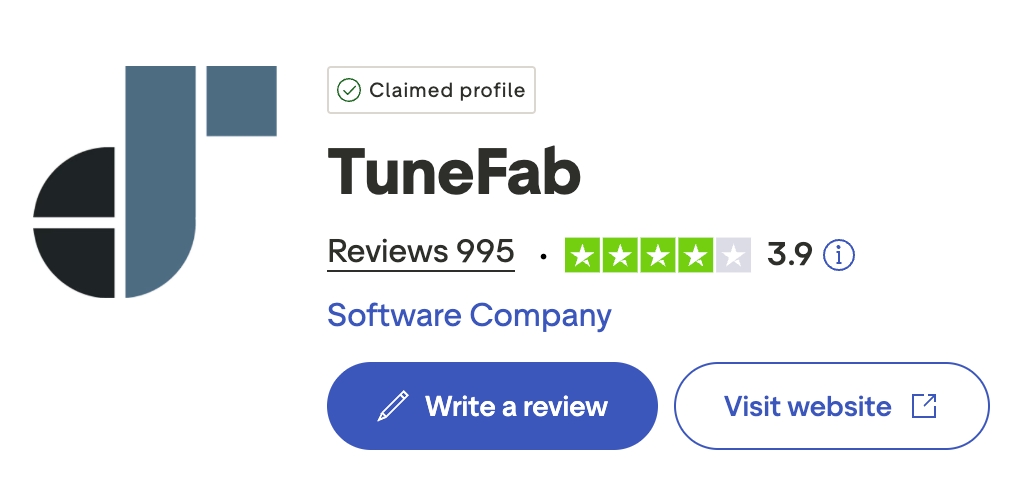
A captured July 2026 listing showed TuneFab at 4/5 from 998 Trustpilot reviews. That aggregate does not settle individual complaints, and it should not be labeled objectively high or low without a defined comparison set.
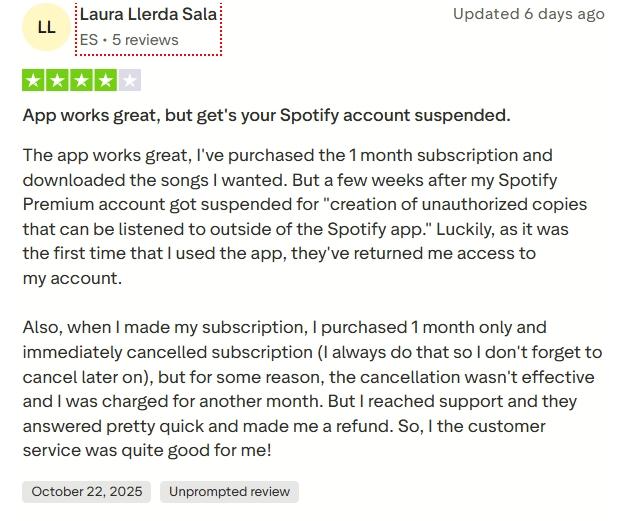
Recurring TuneFab Trustpilot reviews and community discussions mention several themes:
- Billing, cancellation, and refund communication can feel difficult when an order moves through a separate payment portal.
- Some large queues reportedly stall or lose tracks, although the supplied hands-on sample does not reproduce that scenario.
- Support response time is inconsistent in user accounts.
- Account warnings are reported, but available evidence does not establish product-specific causation.
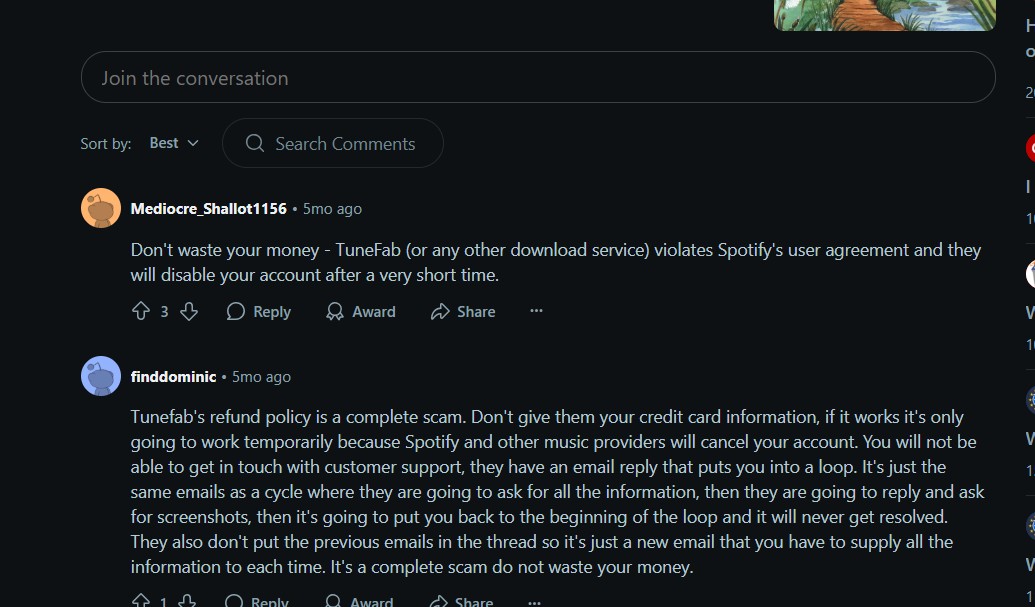
Reddit discussions echo concerns about reliability and account access, but short community posts are pain signals rather than controlled evidence.
Pros and Cons of TuneFab
The TuneFab review evidence supports a short, qualified list: the app is approachable for small desktop jobs, but the trial and archived test leave important questions about current large-batch behavior and post-purchase support.
What We Like
- A clear service-to-queue desktop workflow.
- Multiple common audio formats and visible metadata controls.
- A TuneFab free trial with three full songs rather than a brief excerpt.
- Monthly, annual, and perpetual plan types for different commitment levels.
What We Don't Like
- The available hands-on result is from v4.0.6 and one track, not a current large-playlist test.
- The interface looked dated in the archived session.
- User reports raise billing, cancellation, batch-failure, and support-response concerns.
- Reported account warnings require cautious wording because causation is not established.
My synthesis: TuneFab is easiest to justify for a small, tested workflow; the case becomes weaker when reliable bulk conversion and responsive support are the deciding factors.
MusicFab as a TuneFab Alternative
MusicFab is relevant when TuneFab's trial scope, batch uncertainty, or interface does not fit the job. It should remain a backup path in this review, not a substitute for evaluating TuneFab on its own evidence.
For content you're authorized to access, where permitted by platform terms and applicable law, MusicFab Spotify Converter provides a Windows and macOS desktop workflow relative to Spotify's official offline feature and requires active access to the original service.
Where MusicFab Fits and Falls Short
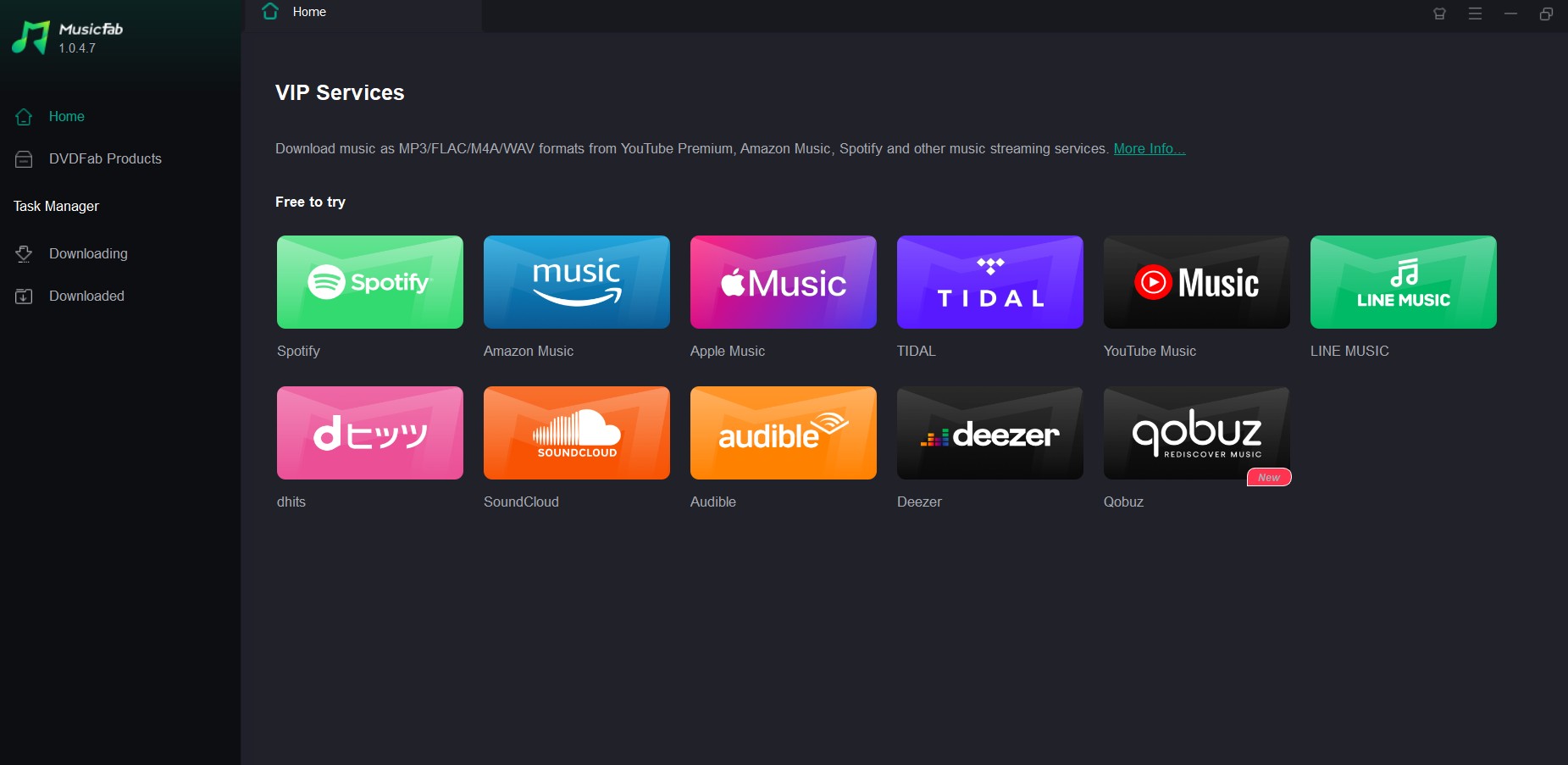
MusicFab combines a built-in browser with a stated direct-source workflow of up to 20x, depending on hardware and network conditions. It supports MP3, M4A (AAC), WAV, FLAC, and OPUS, keeps ID3 data and lyrics, and offers a 30-day trial covering three full songs per service.
Suitable for: Windows or Mac users who need portable local audio files and care about tags, lyrics, or format choice.
Not ideal for: readers satisfied with Spotify's official in-app offline mode or anyone unwilling to maintain an active Spotify subscription.
The broader platform and workflow context belongs in the full MusicFab review; here, the relevant point is fit, not a claim that one product wins every comparison.
How to use MusicFab Spotify Converter? Watch the video tutorial below:
TuneFab vs. MusicFab Comparison
This comparison focuses on purchase and workflow differences rather than declaring a universal winner. TuneFab has the simpler historical evidence in this article; MusicFab supplies a more clearly documented local-file specification, but neither deserves a categorical account-safety rating.
| Feature | TuneFab Spotify Music Converter | MusicFab Spotify Converter |
|---|---|---|
| Plan options and refunds | Monthly, annual, and perpetual options; 7-day subscription and 30-day perpetual refund windows | Plan options vary; 30-day trial with three full songs per service |
| Free-trial limit | Three full songs | Three full songs per service |
| Desktop systems | Windows and macOS | Windows and macOS |
| Audio formats | MP3, WAV, AAC, FLAC, and additional app-listed choices | MP3, M4A (AAC), WAV, FLAC, and OPUS |
| Audio and library handling | Up to 320 kbps selected output; metadata available; source quality needs separate verification | Up to 320 kbps with ID3 data, cover art, track numbers, and .lrc lyrics |
| Workflow and speed | Embedded Spotify workflow; historical single-track result, with no current large-batch benchmark here | Built-in browser; stated processing up to 20x, depending on hardware and network |
| Large-playlist evidence | User reports include stalls; no reproducible current large-playlist result in this review | Batch playlists supported; no article-specific large-playlist benchmark supplied |
| Account evidence | User warnings are reported, while Spotify does not identify TuneFab in its disabled-account guidance | No categorical low-risk claim; Spotify terms and normal account safeguards still apply |
| Best fit | Occasional desktop conversion after reviewing terms; less suited to buyers needing proven large-batch stability | Windows or Mac users needing portable authorized files; unnecessary when official in-app offline mode is enough |
Readers evaluating another dedicated converter can use the TunePat Spotify converter review as a separate product assessment rather than expanding this two-product decision into a crowded ranking.
The practical upshot is scenario-based: test TuneFab first for occasional tracks, demand a representative batch before committing a large library, and consider MusicFab when portable formats and documented metadata handling are central requirements.
FAQs
Is TuneFab Worth It?
TuneFab can be worth considering for occasional desktop conversion if the three-song trial reproduces your intended workflow and the license terms suit you. It is harder to recommend for a large library without a current batch test and comfort with reported support and cancellation friction.
I would not decide from the old five-to-six-second track result alone. Start with the trial, inspect tags and file quality, run a representative playlist, then weigh the plan and refund window. If portable formats and library metadata matter more than TuneFab's workflow, MusicFab is a reasonable desktop alternative.
Can I run TuneFab Spotify Music Converter on an Android phone?
No. TuneFab Android availability does not extend to the reviewed Spotify converter, which is a Windows and macOS desktop product. Audio created on a computer may play on an Android device if the phone supports the chosen format, but the converter itself does not run there.
Does TuneFab save Spotify audio as M4A or MP4?
TuneFab is an audio-conversion product, not a video exporter. Use an audio format listed in the current app; M4A is an audio container, while MP4 commonly refers to a video container and should not be assumed from the product name.
Will TuneFab-converted songs play from a car USB drive?
They can if the car stereo supports the selected audio format and the USB drive's file system. MP3 is usually the most broadly compatible choice; also check whether the stereo reads folder order, track numbers, cover art, and other metadata the way you expect.
Conclusion
TuneFab Spotify Music Converter provides a desktop workflow for users who want to create local audio files from Spotify content they are authorized to access. The archived hands-on test showed that the app could complete a single-track conversion and display metadata successfully, but that result should not be treated as proof of current large-playlist reliability.
If you only need occasional conversions, the trial is enough to check the interface, output settings, and file organization. If you plan to process a large music library, test a representative playlist first and verify track matching, metadata, and recovery from failed items.


Compare each Spotify to Apple Music playlist converter by device, free transfer access, verified 2026 limits, sync options, and mismatched-track review.
By Jane Chen - Sep 22, 2026
Learn how to burn a CD from Spotify on Windows or Mac by preparing MP3/WAV files, choosing a disc type, and using free CD-burning tools.
By Jane Chen - Sep 22, 2026
This guide compares nine Spotify downloaders across browser, desktop, Android, and iOS workflows. It weighs source matching, output quality, playlist and ZIP behavior, metadata, account exposure, and tool status, then explains which option fits a single track, a long playlist, or a managed local library.
By Jane Chen - Aug 26, 2026
Spotify downloads can stall because of Premium eligibility, device limits, storage, network permissions, cache state, or a service incident. This guide gives one nine-fix recovery path, then separates iPhone, Android, Windows/Mac, Apple Watch, partial-playlist, Offline Mode, and clean-reinstall cases. It also explains when a MusicFab local-file workflow fits authorized personal use.
By Jane Chen - Aug 26, 2026